
LoRa
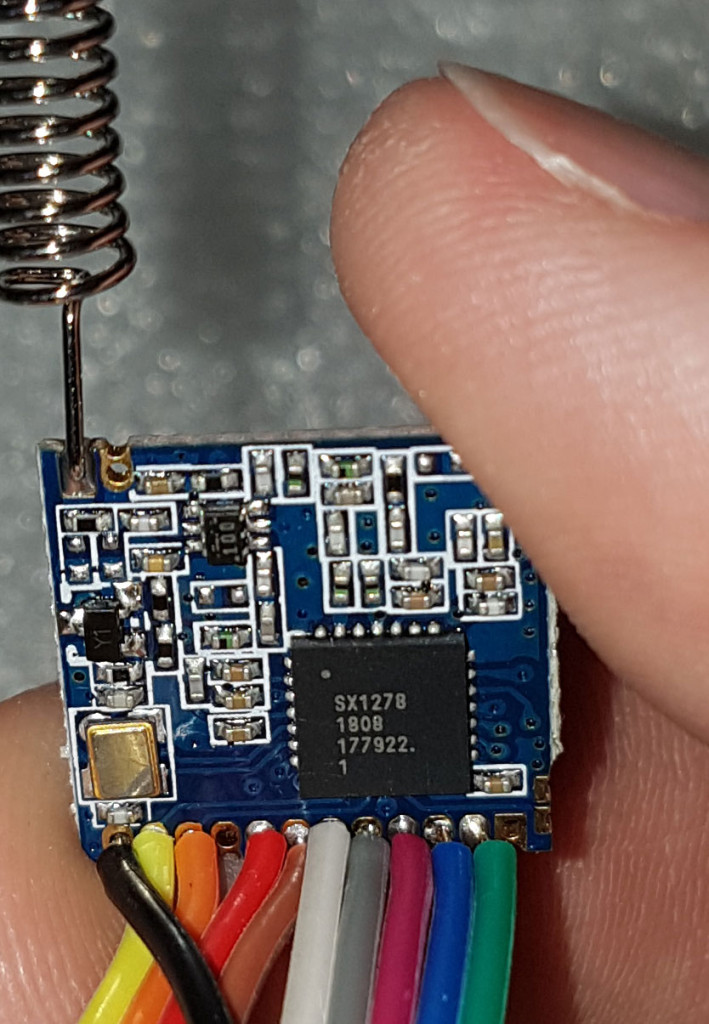
LoRa Communication
Image: en.wikipedia.org - LoRa
LoRa (long range) is a proprietary radio modulation technique based on Chirp Spread Spectrum (CSS), which encodes data on radio waves using frequency-sweeping chirp pulses. It operates on license-free sub-gigahertz bands: 868 MHz in Europe, 915 MHz in North America and Australia, 433 MHz globally.
The core tradeoff is range vs. data rate. Spreading factors (SF5–SF12) let you tune this: higher SF means longer range and better sensitivity, but slower throughput and more battery drain. Data rates run from 0.3 to 27 kbit/s, per Wikipedia. Typical range is 2–5 km urban, 5–15 km rural, and beyond 15 km line-of-sight, according to readthedocs.io.
LoRa is the physical radio layer only. LoRaWAN sits on top as the network protocol (MAC layer), defining how devices connect to gateways and the internet. The Things Network describes LoRaWAN devices as capable of running up to 10 years on a single coin cell battery.
Semtech owns the LoRa IP and makes the chipsets. The LoRa Alliance, a 500-member non-profit, maintains the LoRaWAN standard, which the ITU formally recognized in December 2021.
Common applications include smart agriculture, asset tracking, water leak detection, cold chain monitoring, and mesh networks like Meshtastic.
For a thorough technical grounding, The Things Network's LoRaWAN guide is the most practical starting point.
Sources: Wikipedia, The Things Network, Semtech, readthedocs.io
LoRa PHY | Semtech - What Is Lora | Semtech
LoRa (short for long range) is a spread spectrum modulation technique derived from chirp spread spectrum (CSS) technology.www.semtech.com

xyx
in reply to Zerush • • •Have a look at meshcore.io/ and lilygo.cc/products/t-deck while you're at it.
T-Deck
LILYGO®Zerush
in reply to xyx • • •PotatoesFall
in reply to Zerush • • •