
US Senator moves to file Section 230 repeal
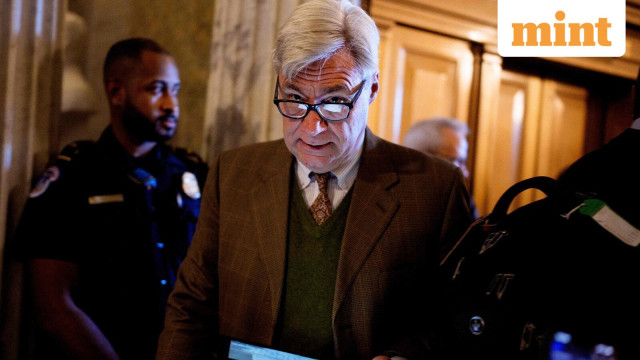
US Senator moves to file Section 230 repeal: What is the law? How will a ban affect your free speech on the internet?
Section 230, passed in 1996 as part of the Telecommunications Act, has become the centre of a intense political debate in the recent years.Swastika Das Sharma (mint)
like this

originalucifer
in reply to Weydemeyer • • •this is one of the primary pillars of the u.s. democracy people.
if this falls, the u.s. should be officially declared a fascist state. there will be nothing from preventing the u.s. government from crushing any and all media it deems unworthy including and specifically your personal blogs.
this is removal of freedom of speech with extra steps to pretend like its not.
Weydemeyer
in reply to Weydemeyer • • •I think the user darkcalling, in commenting on this story in the current Hexbear news mega thread, had a spot on analysis of this:
... Show more...I think the user darkcalling, in commenting on this story in the current Hexbear news mega thread, had a spot on analysis of this:
The speed at which western governments have been moving recently to erode privacy, and thus a free internet, really has been staggering to me, and I’ve been following this stuff for a while. There’s been a total blitz against 3 pillars of freedom: 1.) destroy our ability to have private conversations (chat control), 2.) know exactly who everyone is online and identify all your online activity (age verification), and 3.) effectively destroy user generated content - at least content which is a threat to power (this attack on Section 230).
Personally, I think this recent all-out attack is due to 2 things. The first is the genocide in Gaza. The ruling classes were caught off guard there. They had previously been operating under the assumption that their control of mainstream tradition media meant they can control whatever narrative they want. Social media was for kids and they’re not politically relevant, so who cares. But having a genocide live-streamed completely destroyed decades of hard work at crafting a pro-Zionist public in the west. They’re not going to let that happen again, so bye-bye TikTok (the other platforms like Instagram were already compromised, TikTok was the only one outside of their grasp).
The second factor though, despite all the bluster and bravado about how “great” the economy is from Trump and the media (and tbf, Biden and the dems before him), I think the ruling classes know damn well just how bad things are. More than that, they know things are gonna get a lot worse. Neoliberalism was the method by which capitalism was able to extend its life. The crises it faced in the late 60s and 70s were really just an extension of the Great Depression. The only way the capitalist world was able to pull itself out of that was through a global war that destroyed so much capital that they got an economic boom for 2-3 decades just from rebuilding the world order. But now neoliberalism has spent itself and they have no answers for what to do next. Thus, they are fully expecting the people to fight back. The internet is maybe the most powerful tool that people have for organizing themselves and fighting back, so that MUST be brought under lockdown by the capitalists before it’s too late.
EDIT: I also wanted to ask, since I’m fairly new to federation… how would repealing Section 230 affect the fediverse specifically?
Steve
in reply to Weydemeyer • • •What crisis did capitalism have in the 60s & 70s?
I've never heard of that before.
As far as I know that was the best years this country has known. Top tax rates were ~90%. The middle class was larger and more prosperous than anytime before or since. We were making huge strides in science and tech, as well as social progress.
But the greedy NeoLiberals fealt that while things were good and getting better for almost everyone, they were being held back by all the taxes and regulations that helped the unworthy "poors" at their expense.
Weydemeyer
in reply to Steve • • •Steve
in reply to Weydemeyer • • •Section 230 doesn't need to be repealed, it only needs to be amended.
It basically says that online platforms can't be held liable for the content their users post.
However that was put in place before black box algorithms were put in charge of peoples feeds, and literally hacking our brains to keep us outraged, afraid, and engaged.
It needs to be amended to hold companies liable for content their algorithms recommend to people. It's one thing to allow people to post whatever they want. That needs to preserved. But if a site "recommends " something that's harmful, they should be held responsible for that recommendation.
pdxfed
in reply to Steve • • •kibiz0r
in reply to pdxfed • • •Yeah, we need to be careful about distinguishing policy objectives from policy language.
“Hold megacorps responsible for harmful algorithms” is a good policy objective.
How we hold them responsible is an open question. Legal recourse is just one option. And it’s an option that risks collateral damage.
But why are they able to profit from harmful products in the first place? Lack of meaningful competition.
It really all comes back to the enshittification thesis. Unless we force these firms to open themselves up to competition, they have no reason to stop abusing their customers.
“We’ll get sued” gives them a reason. “They’ll switch to a competitor’s service” also gives them a reason, and one they’re more likely to respect — if they see it as a real possibility.
schnurrito
in reply to pdxfed • • •Steve
in reply to pdxfed • • •Those who are harmed decide. 230 is about protecting companies from law suits filed by users.
The whole "end of free speech" issue comes not so much from the government sensor really (that's still firmly restricted by the first amendment) but from companies themselves banning any content or accounts that might get them sued.
But if that risk is limited only to what they recommend outside a user's direct boolean search and filters, they can still host content without concern. But they need to be sure they know and approve exactly what their algorithms are pushing onto people.
pdxfed
in reply to Steve • • •Really? The early major moves (so stupidly transparent and to reinforce the concern and urgency) was to go after Facebook who agreed to appoint a government representative to their board. Which is unprecedented except in state-controlled entities. Threats have been made and lawsuits filed by Trump personally or his new attack dog the "DOJ" against most major media organizations including those who produce content and/or control distribution and algorithms. Many of the orgs have paid "fines" or tributes to the government in power to remain in favor and altered their content, presentation and/or coverage. This is naked violation of freedom of speech and press.
Back to the point: if enormous and otherwise powerful companies so easily fold--in a matter of months into an administration--there is no "independence" and govern
... Show more...Really? The early major moves (so stupidly transparent and to reinforce the concern and urgency) was to go after Facebook who agreed to appoint a government representative to their board. Which is unprecedented except in state-controlled entities. Threats have been made and lawsuits filed by Trump personally or his new attack dog the "DOJ" against most major media organizations including those who produce content and/or control distribution and algorithms. Many of the orgs have paid "fines" or tributes to the government in power to remain in favor and altered their content, presentation and/or coverage. This is naked violation of freedom of speech and press.
Back to the point: if enormous and otherwise powerful companies so easily fold--in a matter of months into an administration--there is no "independence" and government censor is hardly theoretical as you would present it, but already in place, and as such puts who defines "dangerous" in an unsustainably temptingly powerful position ripe for future abuse. This is existentially concerning no matter your political stripes as it's the end of the political experiment that was the US.
Steve
in reply to pdxfed • • •satanmat
in reply to Steve • • •Whelp.
Ya know, the republicans have been talking about repealing and replacing the ACA since it passed; and we’re still waiting on their version to replace it.
So … yeah… I’m sure that repealing 230 is just the first step… they’ll let us know asap how they’re going to replace, or as you suggest amend it any day now.
Steve
in reply to satanmat • • •As I said, don't repeal it, amend it.
queermunist she/her
in reply to Steve • • •Steve
in reply to queermunist she/her • • •Yes that's why repealing is the wrong thing to do.
As I said amend it.
The Fediverse doesn't have any black box algorithms that recommend content. With the flat repeal of 230 it would be in danger. With my amendment it wouldn't.
queermunist she/her
in reply to Steve • • •You literally didn't say it was wrong.
And they aren't amending it. They're repealing it. The internet is going to be destroyed, and you're wishcasting about something irrelevant that isn't on the table. I think we should probably focus on how absolutely fucking horrible a repeal would be.
Steve
in reply to queermunist she/her • • •Sorry for the confusion.
banazir
in reply to Weydemeyer • • •As I understand it, just straight up repealing Section 230 would immediately shut down practically any ability to post comments etc. No company or individual could accept unvetted posts from users, because they would be liable for any illegal content therein. So in essence, if you hate a site and want to take it down, just make posts that land them in hot water and they will be forced to shut down eventually. And you know the Internet is full of malicious actors. Sites like Lemmy could not exist in the US. Practically, you would have to run your own server to post things you want to express - and make sure no one else has access.
Repealing Section 230 sounds just stupid and short sighted, at least without a workable alternative. So, US legislators will probably go ahead and repeal it. Brilliant.
golden_zealot
in reply to Weydemeyer • • •I don't think this would pass, the megacorps stand wayyy too much to lose here and would fight tooth and nail to prevent anything like this. Same goes for a lot of the US government. This would kill any website with user generated content because no company would risk the lawsuits and basically boils down to two options for them - get collapsed due to the cost of legal fees resulting from millions of lawsuits, or get collapsed because the major sources of income streams of your business no longer exist.
Facebook/meta - gone, youtube - gone, reddit - gone, lemmy - gone, twitter/x - gone, bluesky - gone, every chat application - gone, every email provider with a web application - gone, every search engine - gone because they wouldn't be caught dead potentially displaying anything made by a user, etc.
This would instantly kill the thousands of data mining/brokering businesses that exist because they collect and sell this data.
Sections of government that collect the same data to spy on what people are up to would also not be happy about this. Making it so that peopl
... Show more...I don't think this would pass, the megacorps stand wayyy too much to lose here and would fight tooth and nail to prevent anything like this. Same goes for a lot of the US government. This would kill any website with user generated content because no company would risk the lawsuits and basically boils down to two options for them - get collapsed due to the cost of legal fees resulting from millions of lawsuits, or get collapsed because the major sources of income streams of your business no longer exist.
Facebook/meta - gone, youtube - gone, reddit - gone, lemmy - gone, twitter/x - gone, bluesky - gone, every chat application - gone, every email provider with a web application - gone, every search engine - gone because they wouldn't be caught dead potentially displaying anything made by a user, etc.
This would instantly kill the thousands of data mining/brokering businesses that exist because they collect and sell this data.
Sections of government that collect the same data to spy on what people are up to would also not be happy about this. Making it so that people can't openly discuss anything actually damages their ability to control narrative because no one would be able to speak openly anymore, including bot accounts.
Ad companies would die because users would no longer have any reason to visit half the websites where the ads are and therefore advertising on them would be useless.
IT infrastructure would collapse because there would no longer be any place to discuss fixes or workarounds to problems and every open source project would cease development - which a tonne of proprietary technology uses in their stack. Every business that uses a LAMP stack would almost immediately be fucked.
Billing systems would collapse, large numbers of people wouldn't be receiving paychecks anymore, supply chains would crumble, etc.
Tonnes of companies would get hacked because there wouldn't be a reasonable way for people to distribute information/stay in the know on new vulnerabilities for the masses of IT/security workers.
No one could leave reviews of any kind on any service or product which has a litany of resulting problems itself.
This would also result in an ungodly amount of lawsuits filed for any and all reasons which would basically collapse the court system under its weight.
Even if this went through, I'm sure it would immediately collapse the economy like has never been seen before and they would scramble to revert it.
Pearl
in reply to golden_zealot • • •What do you mean? It basically switches to a more corrupt system where your website is safe in exchange for a bribe, and timely censorship requests.
Every mega corp will be fine.
golden_zealot
in reply to Pearl • • •If the news were that it was being amended to make carve outs for businesses who pay an amount of money, then I would be more inclined to agree.
But the news is that it would be repealed entirely.
This means you could not bribe the government once to protect you from all lawsuits - you would have to bribe each and every judge involved in each and every lawsuit, and/or each and every juror.
1 Billion people sue your company. I don't think any megacorp would be happy about suddenly having to pay out 1 billion bribes and to do so as a regular ongoing expense.
The least expensive option for the corporations is to not have this repealed. As a result, that is what they would prefer to put that money into instead. Way cheaper to bribe this into not passing than it is to have to do it continuously or multiple times and/or losing those income streams.
queermunist she/her
in reply to golden_zealot • • •Functionally every law has a carve out for businesses who pay an amount of money.
golden_zealot
in reply to queermunist she/her • • •☂️-
in reply to golden_zealot • • •golden_zealot
in reply to ☂️- • • •FortifiedAttack [any]
in reply to Weydemeyer • • •I thought this was a Republican initially -- but nope, introduced by a Democrat.
Welp, wave goodbye to the free internet.