
Ways to convince people to take online privacy seriously - common objections debunked
Our latest blog post is aimed at people who 'get it' about online privacy, but who struggle to convince friends and family to take it seriously. We hope it helps!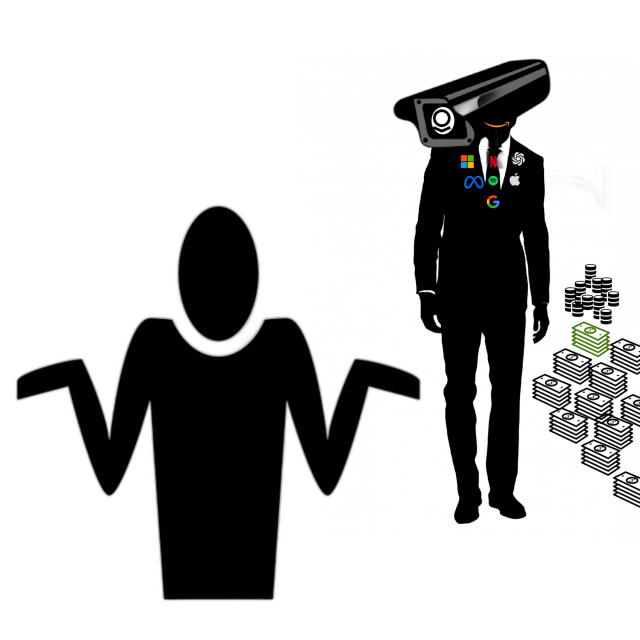
Common objections debunked
Your one-stop-shop for convincing people to take online privacy seriouslyPatrick Leavy (The Rebel Blog)

Célia
in reply to Paddy66 • • •eldavi
in reply to Célia • • •irmadlad
in reply to eldavi • • •Minimac
in reply to Paddy66 • • •kindred
in reply to Paddy66 • • •I already "get it" and I don't find this argument too convincing.
If you're 25 years old and cut them off, they still have :
- your data from the last 24 years
- the data of everyone in your demographic
- the data of your family, friends, and coworkers
(Yes, I get that it's different if everyone cuts off data harvesting at the same time, but this is about convincing one person.)
Rebel Tech Alliance
www.rebeltechalliance.orgcalmblue75
in reply to kindred • • •kindred
in reply to calmblue75 • • •That doesn't address the other two bullet points.
It's like tracking an animal moving in tall grass. You don't need to be able to see the animal directly to tell where it is.
If I can't disappear completely, there's enough data points around me that a useful silhouette can be reconstructed from all the surrounding data.
What's the point?
SreudianFlip
in reply to kindred • • •jherazob
in reply to kindred • • •The point is that by fighting back they cannot get any more accurate than that, which helps, even if it's incomplete and imperfect.
There's also the spite angle, because fuck them, i am not gonna give them shit if i can help it!
Paddy66
in reply to kindred • • •That is an entirely valid point - and exactly why I wrote that blog post. To help people to explain to those around them that they also need to do something about their privacy. Otherwise they're giving you away by association.
Come to think of it, I probably should have mentioned that in the post 🤦🏼♂️
evilcultist
in reply to kindred • • •The more data they have, the more accurate the picture. You may be underestimating how much we all change over the years. At 24 you know what your parents taught you and maybe have a degree. You probably aren’t married. You probably don’t have kids. You probably don’t have any diseases (that you know of).
At 30, maybe you’re married and they’re collecting information about that. At 35 you’ve changed careers and gained or lost a religion. Maybe you have children (now they’re adding info on your children). Maybe you’ve found out that you are diabetic or bipolar. Maybe you’ve had two car accidents. At 40 you’ve cast off a lot of the demands of your parents. Maybe you get divorced. Maybe you realize you’re gay or trans. Maybe you become invested in a different type of politics. Maybe you change careers again. Maybe the bipolar diagnosis gets removed as a misdiagnosis. Maybe now you’ve had cancer.
Imagine how much less they’d have on you (and your children) at 45 if you had cut them off at 24.
... Show more...The more data they have, the more accurate the picture. You may be underestimating how much we all change over the years. At 24 you know what your parents taught you and maybe have a degree. You probably aren’t married. You probably don’t have kids. You probably don’t have any diseases (that you know of).
At 30, maybe you’re married and they’re collecting information about that. At 35 you’ve changed careers and gained or lost a religion. Maybe you have children (now they’re adding info on your children). Maybe you’ve found out that you are diabetic or bipolar. Maybe you’ve had two car accidents. At 40 you’ve cast off a lot of the demands of your parents. Maybe you get divorced. Maybe you realize you’re gay or trans. Maybe you become invested in a different type of politics. Maybe you change careers again. Maybe the bipolar diagnosis gets removed as a misdiagnosis. Maybe now you’ve had cancer.
Imagine how much less they’d have on you (and your children) at 45 if you had cut them off at 24.
kindred
in reply to evilcultist • • •This is concrete, thanks. I can work with this.
The arguments the article gives are way to broad to fly around a Thanksgiving table.
They might as well have titled it:
"Ways to convince people to take online privacy seriously (who are already on the fence and leaning so hard in your direction that a stiff breeze would do the job for you)"
Zak
in reply to Paddy66 • • •Not seeing ads is really convenient, and I have trouble understanding why anyone wouldn't block ads aggressively on every device they spend much time using in 2025.
To cover a couple common objections:
Then it's the institution's IT department I'm puzzled by. If I was running corporate IT, ad blocking would be part of the standard install. The FBI recommends it for security.
Why would you buy such a device, or continue using it now that you know better?
Paddy66
in reply to Zak • • •Good points.
Similar to the other reply - I haven't moved to a privacy OS on Android yet because of money.
My fancy Samsung is not supported by those OSs (yet).
Zak
in reply to Paddy66 • • •That's entirely reasonable. You can still block most ads if you want to:
DNS over HTTPS and DNS over TLS
Mullvad VPN001Guy001
in reply to Paddy66 • • •I have some quotes to share, though about the government side of things
... Show more...And 3 from "No Place To Hide":
I have some quotes to share, though about the government side of things
And 3 from "No Place To Hide":
PrivacyDingus
in reply to Paddy66 • • •onoira [they/them]
in reply to PrivacyDingus • • •PrivacyDingus
in reply to onoira [they/them] • • •jherazob
in reply to PrivacyDingus • • •DravenStormborn
in reply to Paddy66 • • •Zerush
in reply to Paddy66 • • •Jumbie
in reply to Zerush • • •Dude wtf are you saying?
EDIT: Most likely a bot.
Zerush
in reply to Jumbie • • •FriendBesto
in reply to Paddy66 • • •Paddy66
in reply to FriendBesto • • •