
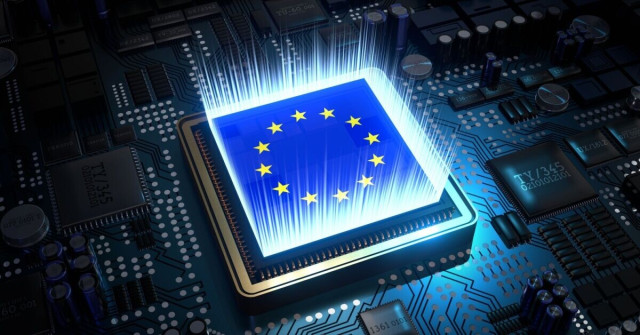
Europe built sovereign clouds to escape US control. Then forgot about the processors
Intel ME and AMD PSP: The silicon layer nobody certifies
About cloud sovereignty and the often-ignored and unknown on-CPU management engine running below the OS and BIOS.
The article is quite long; it explains how CPUs run firmware that can include remote management over the network, and can be running even when the OS is not. They can be vulnerable to supply chain attacks and firmware replacements. Because it's on hardware, the firmware with open security vulnerabilities is often not updated.
Regarding cloud, the French SecNumCloud is a framework for cloud infrastructure security requirements. It doesn't cover these hardware attack vectors specifically but may mitigate risks through surrounding practices and isolation.
In conclusion, even a cloud provider that meets SecNumCloud must be asked whether and how they manage CPU management engine attack vectors.
like this

HappyFrog
in reply to Kissaki • • •greyscale
in reply to HappyFrog • • •Advancing European Sovereignty in HPC with RISC-V
European High-Performance Computing Joint UndertakingHappyFrog
in reply to greyscale • • •Powderhorn
in reply to HappyFrog • • •PrivateNoob
in reply to Kissaki • • •greyscale
in reply to PrivateNoob • • •I dunno man, ARM and RISC-V are pretty dope.
It'd be nice if, say, ST would shit out a EU market RISC-V linux SoC akin to the CV1800B or SG2002 or BL808. But like, europe fabs.
like this
dandi8 and potatoguy like this.
realitista
in reply to greyscale • • •Wahots
in reply to greyscale • • •Feyter
in reply to Kissaki • • •like this
dandi8 likes this.
Kevin
in reply to Feyter • • •Feyter
in reply to Kevin • • •ɔiƚoxɘup
in reply to Feyter • • •So, Ignoring security for a moment, it makes remote resolution of severe machine issues much easier. It is great for IT, it even allows remote OS reinstall.
Now, considering security issues and the lack of parity between AIs ability to attack and defend (better at breaking than fixing) it is sure to become a huge vulnerability, IMO.
vrek
in reply to Kissaki • • •cs.umass.edu/~emery/classes/cm…
The lower you go the harder it is to be able to identify security risks