
The blue light from your phone isn't ruining your sleep
The public freakout about blue light started with a study in 2014. Half of the 12 participants read on an iPad before bed. The rest read physical books. The iPad users took longer to fall asleep, felt groggier the next day and produced less melatonin. The researchers said the culprit was the glow emitted from the iPad's LED screen, which produces a disproportionate amount of light in the upper, bluer end of the spectrum. Under specific circumstances, blue-enriched light disrupts the daily circadian rhythm – our body's natural pacemaker – that uses daylight to help determine when we start to feel tired. Subsequent research seemed to support the findings. Sounds simple, right? It's not."This was an incredibly deceptive piece of work," says Jamie Zeitzer, a professor of psychiatry and behavioural sciences at Stanford University, who studies the effect of light on the circadian system. The science wasn't bad, he says, the problem is it brought people to bad conclusions.
After years warnings and millions of people flipping on the blue light filters built into their phones, the latest science suggests screens are not the main culprit here after all. For example, a recent review of 11 different studies and found that the light from screens only delayed sleep by about nine minutes, at worst. Not zero, but not life altering, either.The amount of blue light emitted by the screens of phones, laptops and tablets has also been shown to be tiny compared to the blue light we receive from the Sun – 24 hours-worth of blue light from digital devices totted up to less than one minute spent outdoors, according to one study. Other studies have shown it's not enough to affect levels of the hormones that control our sleep.
So why am I so tired all the time? Zeitzer and others told me there are lots of other ways that light, blue and otherwise, could be ruining my bedtime. If I really wanted to tackle the blue monster, it was going to take a serious lifestyle change.
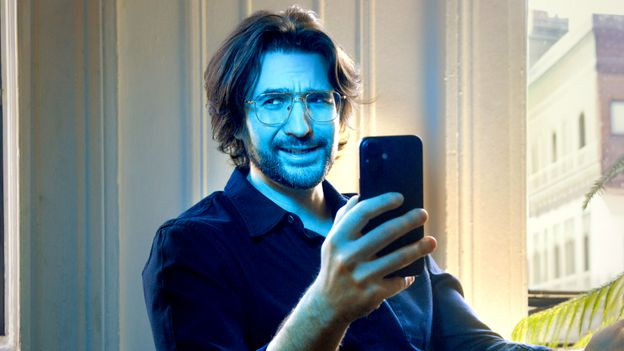
The blue light from your phone isn't ruining your sleep
For a decade, we've been told our screens are wrecking our sleep. The real culprit is far bigger than the glow from your phone.Thomas Germain (BBC)
like this
Maeve, Lasslinthar, mrmaplebar and Hexanimo like this.

manxu
in reply to alyaza [they/she] • • •Tim_Bisley
in reply to manxu • • •like this
HarkMahlberg, classic, Hexanimo and deliriousdreams like this.
ordnance_qf_17_pounder
in reply to alyaza [they/she] • • •like this
fistac0rpse and deliriousdreams like this.
leriotdelac
in reply to alyaza [they/she] • • •Jiggle_Physics
in reply to leriotdelac • • •like this
Hexanimo, Perky and deliriousdreams like this.
leriotdelac
in reply to Jiggle_Physics • • •Thank you for the detailed answer and overview of the different options! To clarify about Signal: in order to confirm a new account, Signal sends an SMS with a code to the registered number. In Russia, you cannot receive those messages since maybe 2 years ago. So all existing users are fine, but the new users can't register an account.
Edit: typos
Thorry
in reply to leriotdelac • • •like this
deliriousdreams likes this.
Tehdastehdas
in reply to leriotdelac • • •leriotdelac
in reply to Tehdastehdas • • •leriotdelac
in reply to Jiggle_Physics • • •lattrommi
in reply to leriotdelac • • •Onomatopoeia
in reply to leriotdelac • • •Well it's clearly not "blue light".
We don't know what you're doing on your phone, so you can't expect us to diagnose your issues.
I can use my phone right before bed with no problems. It has zero affect on me. But I'm not cruising Lemmy or reading crap that gets to me.
leriotdelac
in reply to Onomatopoeia • • •Ah, I don't ask for any diagnosis from random commenters - if my message left such impression, it was unintentional. My intention was to share my experience and voice out my confusion.
I'll try to clarify because I feel condescending tone in yours and others' comments.
Eye strain / muscle strain or something might still be responsible for the bad feeling the next day. Alternatively, light per se might still be the issue, since I'm one of the suckers with light sensitivity and migraines.
I usually read a book from my screen, and I never do it for too long, unless it's a vacation. I found the article interesting because I blamed the blue light and use filters, but now most probably I would need to search for another solution - or another bedtime activity.
cecilkorik
in reply to alyaza [they/she] • • •Hot take: Manipulative and mentally destructive social media algorithms are the reason your sleep is disrupted. It's what is on the screens that is the problem, not what color it is.
But of course, the tech companies would rather have you blame the color of the screen than their own products. I'm sure they loved adding those color-shifting features to their next products too. not only do they avoid the blame, they get to sell you the "solution".
like this
Atelopus-zeteki, classic, Get_Off_My_WLAN, Hexanimo, Perky, deliriousdreams and dandi8 like this.
TheBlackLounge
in reply to cecilkorik • • •like this
Hexanimo and deliriousdreams like this.
its_me_xiphos
in reply to TheBlackLounge • • •Helix 🧬
in reply to TheBlackLounge • • •flora_explora
in reply to cecilkorik • • •Not necessarily. I don't consume any social media that algorithmically serve me content, but my sleep schedule is still utterly fucked up. I can easily do an offline puzzle for hours instead of going to sleep for example
I guess most people are definitely negatively affected by manipulative algorithms. But I think what is discussed in the article is contributing even more strongly to our society-wide sleep deprivation. That is, spending the vast majority of our time inside.
Sylvartas
in reply to cecilkorik • • •stray
in reply to cecilkorik • • •treadful
in reply to alyaza [they/she] • • •RTO propaganda! /s
Effects of light on human circadian rhythms, sleep and mood - Somnologie
SpringerLinklike this
classic, Hexanimo, HarkMahlberg and deliriousdreams like this.
runner_g
in reply to treadful • • •like this
deliriousdreams likes this.
HarkMahlberg
in reply to alyaza [they/she] • • •like this
fistac0rpse and deliriousdreams like this.
Atelopus-zeteki
in reply to alyaza [they/she] • • •Interventions to reduce short-wavelength (“blue”) light exposure at night and their effects on sleep: A systematic review and meta-analysis academic.oup.com/sleepadvances…
A bidirectional model of sleep and technology use: A theoretical review of How much, for whom, and which mechanisms
sciencedirect.com/science/arti…
like this
HarkMahlberg likes this.
[object Object]
in reply to alyaza [they/she] • • •I’m curious if any part of this is that modern OLED screens are much less blue than 2012’s LED backlit screens, which affect reproducing the study.
Also, beware the tyranny of averages!
An average of 9 minutes can be some part of the population unaffected while another is massively affected.
And agree with others, unless you’re reading books, you’re probably reading email and social media before bed, and the last thing I want before sleep Is to stimulate my brain into thinking. Reading a book really helps with that.
like this
Hexanimo, HarkMahlberg and dandi8 like this.
ByteSorcerer
in reply to [object Object] • • •Screens calibrated for the same colour temperature and wilth equal brightness should emit the same amount of blue light regardless of which display technology they use.
like this
deliriousdreams likes this.
Archangel1313
in reply to alyaza [they/she] • • •Otter
in reply to Archangel1313 • • •They explain where the confusion comes from in the first two paragraphs.
Different wavelengths of light do affect some biological processes, and circadian rhythms are affected by light. From what I understand, there is some consensus that the brightness of the light source can affect sleep. There is no consensus on whether some wavelengths of light are better than others, but it was a reasonable thing to explore.
SaveTheTuaHawk
in reply to Archangel1313 • • •Oh dear....there are pathways in the human brain activated by light frequency, it's an entire area of research known as optogenetics.
Similarly, some disorders of sleep can be treated with chromotherapy, goggles of intense colored light.
randomname
in reply to alyaza [they/she] • • •lattrommi
in reply to alyaza [they/she] • • •I have a wild theory that humans needs the full spectrum of natural sunlight nearly every day for at least an hour or so. It's known already that is creates vitamin D. I think other unknown effects happen and that the screens people stare at are not providing the same spectrum, resulting in a lack of wavelengths that we need to stay healthy.
Newton and Tesla both have anecdotal stories about staring at the sun (or it's reflection) and being inspired by it as well. There are others as well.
It's a crazy idea, I know, but what if, under certain rare circumstances, viewing the sun unlocks certain mental capabilities and enhances the mind or body of the person who experiences it in unexpected ways?
I'm not saying anyone should stare at the sun obviously, I simply think there's so much more to light than we understand and that limiting wavelengths, in my opinion, will only prevent such an occurance, if it were something that actually existed.
Tollana1234567
in reply to lattrommi • • •usualsuspect191
in reply to alyaza [they/she] • • •like this
HarkMahlberg and deliriousdreams like this.
ranandtoldthat
in reply to alyaza [they/she] • • •