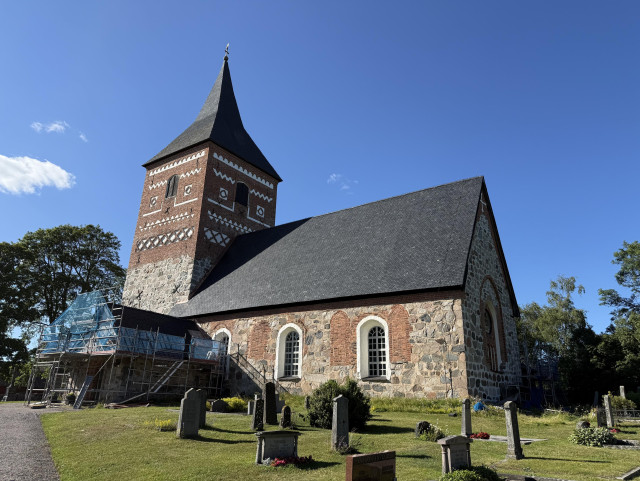
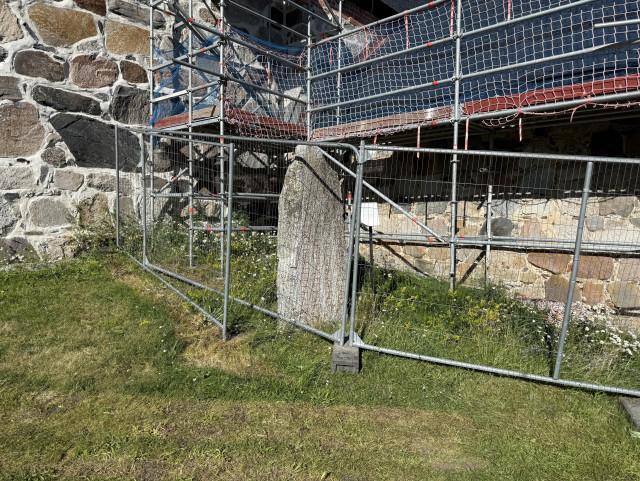
Yesterday I visited Skepptuna church to look at a couple of runestones. Unfortunately the church was being renovated, and the main stone I wanted to look at was fenced in.
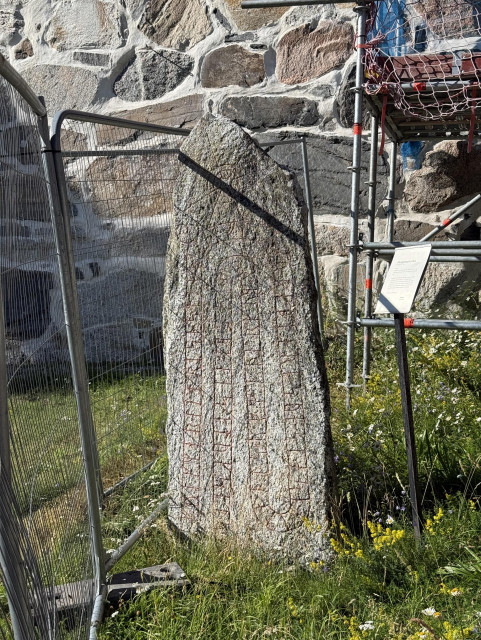
This is the runestone U 358, which is raised in memory of Folkbjörn that died in Greece. Possibly as he worked for the Varangian guard. The stone was probably carved by Gunnar, though there is no carved signature.
Transliteration:
fulkmar × lit × risa × stin × þina × iftiʀ × fulkbiarn × sun × sin × saʀ × itaþis × uk miþ krkum × kuþ × ialbi × ans × ot uk salu
Normalization:
Folkmarr let ræisa stæin þenna æftiʀ Folkbiorn, sun sinn. Saʀ ændaðis ok með Grikkium. Guð hialpi hans and ok salu
Translation:
Folkmarr had this stone raised in memory of Folkbjǫrn, his son. He also met his end among the Greeks. May God help his spirit and soul.
#
... Show more...Yesterday I visited Skepptuna church to look at a couple of runestones. Unfortunately the church was being renovated, and the main stone I wanted to look at was fenced in.
This is the runestone U 358, which is raised in memory of Folkbjörn that died in Greece. Possibly as he worked for the Varangian guard. The stone was probably carved by Gunnar, though there is no carved signature.
Transliteration:
fulkmar × lit × risa × stin × þina × iftiʀ × fulkbiarn × sun × sin × saʀ × itaþis × uk miþ krkum × kuþ × ialbi × ans × ot uk salu
Normalization:
Folkmarr let ræisa stæin þenna æftiʀ Folkbiorn, sun sinn. Saʀ ændaðis ok með Grikkium. Guð hialpi hans and ok salu
Translation:
Folkmarr had this stone raised in memory of Folkbjǫrn, his son. He also met his end among the Greeks. May God help his spirit and soul.
#runestone #history #viking #VikingAge