
🔭 For the first time, astronomers have confirmed an atmosphere on a rocky exoplanet in another star's habitable zone.
The planet is LHS 1140 b, 48 light-years away, orbiting a small red dwarf star. It is about 1.7 times Earth's radius and 5.6 times its mass. A Harvard-led team detected helium escaping from its upper atmosphere using the Magellan Clay Telescope in Chile, published in Science on July 16.
This matters because the three things life needs are all present: rocky surface, right temperature for liquid water, and now a confirmed atmosphere. JWST observations in 2024 ruled out a hydrogen-rich atmosphere, suggesting LHS 1140 b may be a water world with a nitrogen or CO2 atmosphere instead.
The planet is likely not an Earth twin. It may have 9-19% water by mass and sits in the radius valley between super-Earths and mini-Neptunes. Its atmosphere has survived for an estimated 3+ billion years despite the star's activity.
With TRAPPIST-1 planet atmospheres uncertain, researchers call LHS 1140 b the best current target for studying a potentially habitable world.
Read more:
sciencedaily.com/releases/2026…
nature.com/articles/d41586-026…
en.wikipedia.org/wiki/LHS_1140…
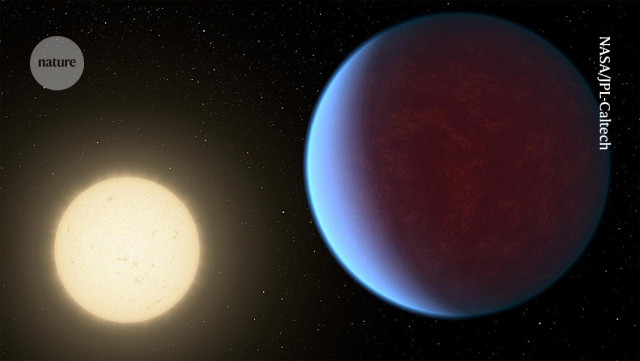
Found: a rocky exoplanet with an atmosphere — could it host life?
Astronomers have spotted helium escaping from LHS 1140b, an exoplanet orbiting in its star’s ‘habitable zone’.Shenai, Dhruv

samiamsam
in reply to jcrabapple • • •jcrabapple
in reply to samiamsam • • •