Search
Items tagged with: neuroscience




#Psychologie #Scifi #FrankHerbert #Dune
...I will permit it to pass over me and through me.'
Few themes in modern #psychology and #neuroscience over the last decade have been more prominent than this:
👉that avoiding negative emotions tends to make them stronger. This is particularly true with anxiety and fear, where several important therapies are based around helping people tolerate exposure to their fear in order to gradually lessen it. 👈
//
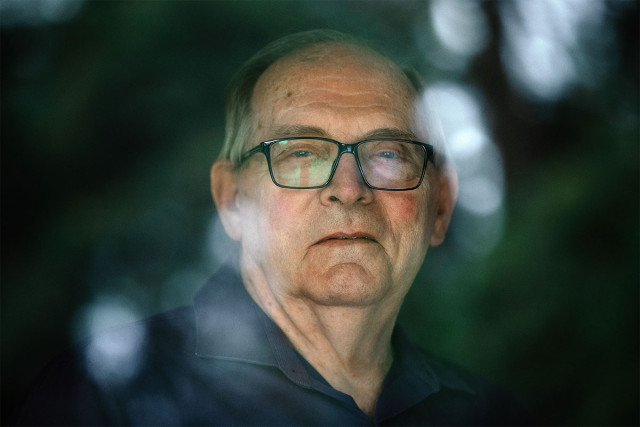
Patient defies genetic fate to avoid Alzheimer’s | WashU Medicine
Study offers clues to treatment, preventionMark Reynolds (WashU Medicine)
#Neuroscientists of the world - do you sometimes have questions about a new technique you're trying to setup in the lab? Or getting too much noise in your system and wondering why? Not sure why your rats / flies / humans are not learning? Which virus to get for your optogenetic experiment? How to stain brain slices? Whether an expensive piece of kit is worth buying? ...
The #NeuroMethods community is there to help! We had been on slack for 10 years but recently moved to #Zulip. Anyone with an academic email can join at: neuromethods.zulipchat.com
questions and answers from experts by experts, no ads, no spam, no genAI :)
Feel free to spread the word to your colleagues, the more, the merrier!
any questions? let me know!
#Neuroscience #ResearchMethods
NeuroMethods
A space to ask and answer questions about methods in Neuroscience (this replaces our previous Slack workspace). Prospective users: you should be able to join with an academic email :) | Cheers to Zulip for sponsoring our workspace!Zulip
"MIT Professor Susumu Tonegawa, renowned molecular biologist and Nobel laureate, dies at 86"
news.mit.edu/2026/mit-professo…
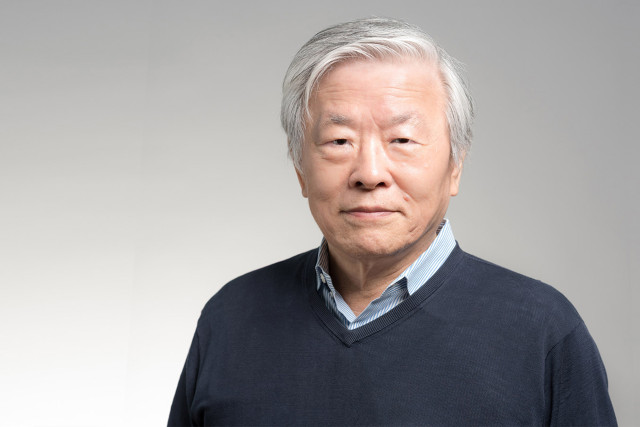
MIT Professor Susumu Tonegawa, renowned molecular biologist and Nobel laureate, dies at 86
Susumu Tonegawa, a renowned MIT professor of biology and neuroscience and a Nobel laureate, has died at the age of 86.MIT News | Massachusetts Institute of Technology
🎵 Sad music activates your brain's reward circuitry not despite the sadness, but because of it. Neuroscientists have found the key isn't sadness at all - it's nostalgia.

What should Neuromatch teach next?
🤓 Connectomics and Neural Dynamics
🤓 Computational Behavioural Analysis & Modelling
🤓 Computational Approaches to Neurodegeneration
🤓 Or something else?
Take the 2 minute survey here: airtable.com/appgbLQW3nbbZJvNU…
#NeurmatchAcademy #Neuroscience #CompNeuro #OpenScience #DeepLearning #NeuroAI
Airtable | Everyone's app platform
Airtable is a low-code platform for building collaborative apps. Customize your workflow, collaborate, and achieve ambitious outcomes. Get started for free.Airtable
“ #Neuroscience journal editor resigns over #AI automation concerns.
The editor resigned after the publisher’s artificial-intelligence system overrode his selection of referees for a manuscript.
His move prompted an internal review of the system.”