
Reframing smart glasses as 'pervert glasses'
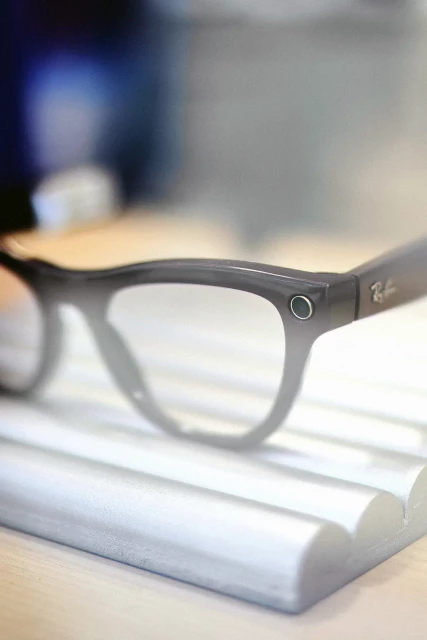
Smart glasses are the latest "luxury surveillance" wearable gadgets on the market, and they're already drawing a ton of heat over privacy concerns.
These internet-connected eyeglasses are equipped with cameras and microphones, and some have AI built-in. This allows the glasses to capture and process audio and video of anyone nearby, but with no way for them to automatically opt out. When someone holds a phone camera to your face, at least you know it's happening. With smart glasses, you might not be aware that they have been recording you the whole time.
Data-hungry advertising tech giants like Meta and Snap have launched their own smart glasses with help from fashion brands Ray-Ban and Oakley and celebrity endorsements to drum up demand. Apple and Google are reportedly also preparing their own rival wearables.
But much of the consumer response has been fierce backlash over fears about surveillance and tracking. Some have developed apps that can detect when a person nearby has a pair of smart glasses, while others have physically taken matters into their own hands when faced with assholes wearing camera glasses on the subway.
In a recent story exploring consumer sentiment about surveillance, Vogue Business described smart glasses as legal but existing in "a gray space between what the law permits and what society deems acceptable." This has given rise to people calling out these wearables as "pervert glasses," following similar unsolicited encounters with creeps wearing them to harass people. For any benefits that smart glasses may offer their wearers, the tradeoff is that they violate the privacy of otherpeople.
Per Vogue Business, which quotes sociotechnologist Dr. Sarah Saska, it's easy to understand why:
"The immediate risks are covert and sexualized recording, filming people in vulnerable moments, capturing children, harassment, stalking, and footage that can fuel extortion or deepfakes. The ‘creep’ framing is provocative, and it points to something real.But I worry that it shrinks the problem to one creep on a train taking a picture, when the structural danger is always-on cameras becoming ordinary, human workers reviewing footage, and data pooling in an ecosystem owned by one company. Once that hardware sits on millions of faces, it becomes infrastructure that police, immigration agencies, employers, and the company itself can draw on. The creep is one manifestation of a much larger system."
The term "pervert glasses" took off earlier this year largely in response to an investigative news report revealing how Meta's smart glasses enable the exposure of personal information and sexual activity of their users. Contractors in Nairobi working for Meta described their experiences to reporters, including having access to highly sensitive and intimate videos uploaded by owners of Meta's smart glasses, from bank details to imagery of naked people.
The reporting also brought broader public awareness about where recordings from smart glasses get uploaded to and who has access to that footage, including tech company employees and contractors, as well as government authorities demanding access to it.
PLEASE SUPPORT THIS NEWSLETTER!
~this week in security~ is my weekly cybersecurity newsletter supported by readers like you. Please consider signing up for a paying subscription starting at $10/month for exclusive articles, analysis, and more.
Or, you can submit a one-time tip to show your support!
Recent stories include: Dozens of America's largest companies have no simple way to report security flaws | The sneaky ways that governments get your private data | Will Oura say how many government demands it gets for user data? | Reflections on eight years of writing ~this week in security~
Subscribe to access premium blogs
I think this backlash against smart glasses is justified from a security and privacy perspective. Using technology to secretly record someone else isn't new, but bringing this audio- and video-collecting wearable tech into the mainstream has the potential to make it easier to carry out cybercrime and fraud by lowering the bar to entry for abuse.
The ability to covertly record and play back something displayed on someone's phone or computer screen or while someone taps in their password on a keyboard presents a major security problem — especially if that person is unaware of it happening. Recording sensitive data also creates a future risk of that information getting compromised, hacked, or obtained by a legal authority.
It is understandable why some are reframing smart glasses as "pervert glasses," by rejecting the sanitized marketing of tech companies and calling these products what they see them as: surveillance devices. It also speaks to the distrust that some consumers have with tech giants after years of abuses and scandals misappropriating people's data.
There are valid concerns that smart glasses on the market today could soon bake-in more privacy invading tech, like facial recognition. Once the tech companies get their hardware into the hands of consumers, it's easier for the companies to justify rolling out future software updates that normalize new or expansive surveillance capabilities.
We've already seen the nightmare scenario of hobby hackers adding live facial recognition to smart glasses that can identify and reveal the identities of people on the street in real-time, proving how invasive and creepy this technology can be. Meta is reportedly considering adding facial recognition to its smart glasses and app. The digital rights group, the Electronic Frontier Foundation, says that adding facial recognition to smart glasses "would obliterate the privacy of everyone."
It doesn't have to get that far. To the argument that certain technologies and surveillance are in some way inevitable, I don't believe that to be true. It certainly doesn't have to be. You don't need to buy or use these invasive technologies, and you can reject them. Friends don't let friends wear pervert glasses.
~ ~
Thank you so much for reading ~this week in security~! I hope you enjoyed and found this article helpful. If you like it, please share a link on your social media! Please email me with any feedback, questions, or comments about this article: this@weekinsecurity.com.
All the cyber news you need to know, delivered weekly.
sign up for Zack Whittaker's weekly cybersecurity newsletter. Hand-written, zero slop.
Subscribe
Email sent! Check your inbox to complete your signup.
No email open or link tracking. Unsubscribe anytime.
The Rise of the Ray-Ban Meta Creep
Between pickup artists and juvenile pranksters, the wearable device is becoming associated with pests of all kinds.Miles Klee (WIRED)

Em
in reply to ~this week in security~ • • •🫧 Social coding commons
in reply to Em • • •Dutch campaign calls them "Gluurbrillen", voyeur glasses.. banray.eu/en
cc @StopdeGluurbril
There's a great sticker. It can be hung in official places and look official, not an activist sticker someone puts there that quickly gets removed.
BanRay.eu — Your face is not inventory
banray.euHistoPol (#HP) 🏴 🇺🇸 🏴 reshared this.
Elena Brescacin
in reply to 🫧 Social coding commons • • •reshared this
HistoPol (#HP) 🏴 🇺🇸 🏴 reshared this.
VeilleOff
in reply to Elena Brescacin • • •Elena Brescacin
in reply to VeilleOff • • •True, you can do it through your own smartphone, but a wearable tech can help you looking around by turning your head, having free hands. Carrying groceries, then the white cane or the dog's handle or the human assistant's hand, and the smartphone... Then think about matter of stigma. Imagine a future where a blind could move with a pair of glasses as an aid, and possibly a belt warning about obstacles and barriers around, not noticeable by the public. You could walk without being pitied, just do what everyone does. But talking about current reality, stigmatizing a camera with no exceptions, is like stigmatizing a pair of eyes.
About eyes, people generally stigmatize the behaviour. I mean: you're not a jerk because you have a pair of working eyes. You're a jerk if you use your eyes to spy on my tits when I sit next to you, or you look at my... Show more...
True, you can do it through your own smartphone, but a wearable tech can help you looking around by turning your head, having free hands. Carrying groceries, then the white cane or the dog's handle or the human assistant's hand, and the smartphone... Then think about matter of stigma. Imagine a future where a blind could move with a pair of glasses as an aid, and possibly a belt warning about obstacles and barriers around, not noticeable by the public. You could walk without being pitied, just do what everyone does. But talking about current reality, stigmatizing a camera with no exceptions, is like stigmatizing a pair of eyes.
About eyes, people generally stigmatize the behaviour. I mean: you're not a jerk because you have a pair of working eyes. You're a jerk if you use your eyes to spy on my tits when I sit next to you, or you look at my ass when I bend over to pick up something from the floor.
We should start to treat technology the same way. There are lots of privacy concerns, people could record and send your information to the rest of the world. This is a big issue which this kind of glasses have brought.
But these banning campaigns, made just by sighted folks assuming this tech has no other use than spying, well, this is not the right direction.
I'm a woman, I'm blind, I've been harassed by sighted people and also by blind or deaf guys sex-hungry, we should criminalize eyes, hands and fingers at this point; but I think that it'd be better to criminalize sex hormons. (I'm provoking, of course).
And yes, I laugh a lot when the same man saying "you cannot say men are all criminals when you talk about murders and rapes", then says "all smart glasses should be banned because they're used to spy". Stupidity. That's the definition. Simplifying complex problems, just indulging our own fears.
HistoPol (#HP) 🏴 🇺🇸 🏴 reshared this.
Thayer 🔜EMFCAMP ☎️6090
in reply to Elena Brescacin • • •Elena Brescacin
in reply to Thayer 🔜EMFCAMP ☎️6090 • • •I want just to remind those folks saying "there's nothing positive" that it's very easy to talk when you have no need of assistive technologies. I remind them that their sensory ability is not eternal; a disease could happen to anyone and we could lose our abilities just tomorrow.
Then? Most human beings are not here to help. Most human beings think of their own business.
I just would like a more "propositive" community, on the Fediverse at least. A resilient, decentralized, human-based help system (describe pics and environment remotely) doesn't exist. If current centralized human-based service, Be My Eyes, gets stuck somehow, we'd be screwed.
Everyone complaining about big tech smart glasses, saying "glassholes" or stuff, but no one proposes "how could I be helpful to fill in this gap?" I'm becoming more and more disappointed, judging UNRELIABLE all those people saying they are concerned by (their own) privacy without worrying of blind people's right to be independent (and protected in privacy as well).
Jens Finkhäuser
in reply to Elena Brescacin • • •Elena Brescacin
in reply to Jens Finkhäuser • • •If there's something positive about Trump and his entourage, it's that American companies have finally taken their mask off.
Jens Finkhäuser
in reply to Elena Brescacin • • •It's a terrible problem, and the only way that one can arrive at good solutions is to institute policies that aren't authored by these companies (and then washed through some politicians to appear legitimate). It's similar with LLMs, though that tech has more intrinsic flaws.
Unfortunately we live in a time in which politicians are on average particularly corrupt. As a result, I lean a lot more towards bans than I want to - not because I don't want assistive tech, but...
Jens Finkhäuser
in reply to Jens Finkhäuser • • •... because the above makes it particularly difficult to arrive at decent solutions that don't hurt more down the line.
In a sense, the way I see this is that the less corrupt and more overwhelmed politicians have few alternatives. There are orgs that push for better tech regulation, but those are not necessarily in sync with the needs of e.g. blind people.
At the same time, I don't know - genuinely - how well orgs that may stand for blind people's needs are equipped...
Jens Finkhäuser
in reply to Jens Finkhäuser • • •... to propose policies that satisfy the short term needs of the people they represent and the longer term needs of society.
It may be that there's a gap to be closed here?
I'm not sure if this is an accurate assessment, or if closing that gap would have a lot of impact.
I follow the human rights policy considerations group at the IETF (standards body), and see that there is progress to be made when *human rights* people look at tech rather than vice versa. It makes...
Jens Finkhäuser
in reply to Jens Finkhäuser • • •HistoPol (#HP) 🏴 🇺🇸 🏴
in reply to Elena Brescacin • • •#Meta #RayBan #Surveillance #Privacy
(1/n)
I can see your point, Elena, the glasses are but a tool. (Also, I've worked with people with disabilities.)
So is a handgun, regarding which people in most countries think that it's distribution to people should be minimized.
Also, many people have concerns even about #SecurityCameras in public spaces with security issues.
So, I'd like to throw in a couple of discussion points for all:
@VeilleOff
HistoPol (#HP) 🏴 🇺🇸 🏴
in reply to HistoPol (#HP) 🏴 🇺🇸 🏴 • • •#Meta #RayBan #Surveillance #Privacy
(2/n)
1.) Does *everyone* really need such a tool, given the very serious #Security issues of #Meta's (Sp)AI glasses?
As this article shows, the downloads of these connected #RayBans can be sufficient to identify and track down a complete stranger's home address:
mastodon.social/@HistoPol/1169…
Anyone can imagine fanboy and stalker problems. How about sexual abusers? What if the data is used to hunt down regime critics...
... Show more...#Meta #RayBan #Surveillance #Privacy
(2/n)
1.) Does *everyone* really need such a tool, given the very serious #Security issues of #Meta's (Sp)AI glasses?
As this article shows, the downloads of these connected #RayBans can be sufficient to identify and track down a complete stranger's home address:
mastodon.social/@HistoPol/1169…
Anyone can imagine fanboy and stalker problems. How about sexual abusers? What if the data is used to hunt down regime critics...
HistoPol (#HP) 🏴 🇺🇸 🏴
2026-07-16 09:36:05
HistoPol (#HP) 🏴 🇺🇸 🏴
in reply to HistoPol (#HP) 🏴 🇺🇸 🏴 • • •#Meta #RayBan #Surveillance #Privacy
(3/n)
...we all know Putin and MBS dies it.
3.) Why must there be a recording function? Biological eyes don't record, neither should mechanical aids.
4.) Likewise, we've all read the articles about these driving surveillance outfits, better known as #TESLAs, constantly filming its environment and its interior. (TESLA operators are reported to have made fun of their clients while observing them in the cars).
OFC, this is...
HistoPol (#HP) 🏴 🇺🇸 🏴
in reply to HistoPol (#HP) 🏴 🇺🇸 🏴 • • •#Meta #RayBan #Surveillance #Privacy
(4/n)
..it is unacceptable for eyeware cameras to do the same thing with its surroundings.
Explain toe, why there needs to be an upload channel (if there is one so far) or even a permanent-storage (flash?) chip?
5) In some cultures, it is offensive to even take a picture without first asking consent.
From my point of view, filming me, in particular storing the pictures as you go, is offensive and unacceptable.
I do see a...
HistoPol (#HP) 🏴 🇺🇸 🏴
in reply to HistoPol (#HP) 🏴 🇺🇸 🏴 • • •#Meta #RayBan #Surveillance #Privacy
(5/5)
...need for vision aids for target groups in need, but in public places, they should not be allowed at all.
You want to use it on private premises? Be my guest.
//
Dave 🌱
in reply to Elena Brescacin • • •I can see tremendous accessibility benefits, something we've probably only scratched the very surface of.
I can't wait to see a nonprofit, medical, or even governmental body work on something like this specifically as an accessibility tool, like hearing aids before it. That will be absolutely amazing, revolutionary even.
But this isn't about an assistive tool or medical device. This is about a mass surveillance device made by a corporation whose moral code is known to all; they have none.
When one's rights require other people's rights to be impeded upon or violated, it tends to not really be about that person's rights. It's about doing what that person wants regardless of the consequences and harm caused to others.
There is zero doubt what this product is for, and it's frankly shocking how many people willingly give away other people's rights just so they can walk around as the next generation of Glassholes — whatever the reasoning behind that may be.
That it actually can offer something helpful to some is a mere accidental side effect. And how
... Show more...I can see tremendous accessibility benefits, something we've probably only scratched the very surface of.
I can't wait to see a nonprofit, medical, or even governmental body work on something like this specifically as an accessibility tool, like hearing aids before it. That will be absolutely amazing, revolutionary even.
But this isn't about an assistive tool or medical device. This is about a mass surveillance device made by a corporation whose moral code is known to all; they have none.
When one's rights require other people's rights to be impeded upon or violated, it tends to not really be about that person's rights. It's about doing what that person wants regardless of the consequences and harm caused to others.
There is zero doubt what this product is for, and it's frankly shocking how many people willingly give away other people's rights just so they can walk around as the next generation of Glassholes — whatever the reasoning behind that may be.
That it actually can offer something helpful to some is a mere accidental side effect. And however nice that benefit may be, it comes at a cost far greater than some seem to want to accept. To ask everyone around you to give up on their rights and have their information, conversations, and more, be recorded and passed on to the Sugarmountain is, quite frankly, too much to ask for that accidental benefit.
Not to mention the moral and environmental costs. But I know most folk tend to wave away these issues when they are brought up in the context of "AI" usage. It's the meat eater's argument all over again.
Elena Brescacin
in reply to Dave 🌱 • • •That's the reason why I hate Meta. The company I bought glasses from - Envision Technologies- is specialized on blind people, but, I would like mainstream companies to do it. Btw it should be done by researchers as you said, not by hyper-capitalism. I am also following other companies such as Fovionics and Agiga echovision - wouldn't like to misspell the name.
Meta has always used us, trapped us, that's why I don't trust them; my "alert" was because I wouldn't like people to stigmatize glasses in general, because of Meta.
Dave 🌱
in reply to Elena Brescacin • • •how very true yes.
Companies like Meta have a very long track record of acquiring amazing (and) accessible technologies, only to then butcher it and/or absorb it into their money printing machines.
This, too, allows exactly the same companies to hide their vile business practices behind what is effectively a human shield of people who require or otherwise benefit from accessibility features.
Here, for example, you are rightfully worried blind and other people who could legitimately benefit from these kinds of technologies might get lobbed in with the perverts and antisocial idiots who buy these products "just because they want to," which is exactly what these companies want.
Ultimately I think it's best to see these use cases as wholly separate, and not veer into whataboutism territory as much as is possible. Blind people must be allowed access to and to wear assistive tools, and perverts and Glassholes can bugger right off. Both things can and should coexist.
Also, people who complain about folk coming into places with guide dogs can go to hell. Seri
... Show more...how very true yes.
Companies like Meta have a very long track record of acquiring amazing (and) accessible technologies, only to then butcher it and/or absorb it into their money printing machines.
This, too, allows exactly the same companies to hide their vile business practices behind what is effectively a human shield of people who require or otherwise benefit from accessibility features.
Here, for example, you are rightfully worried blind and other people who could legitimately benefit from these kinds of technologies might get lobbed in with the perverts and antisocial idiots who buy these products "just because they want to," which is exactly what these companies want.
Ultimately I think it's best to see these use cases as wholly separate, and not veer into whataboutism territory as much as is possible. Blind people must be allowed access to and to wear assistive tools, and perverts and Glassholes can bugger right off. Both things can and should coexist.
Also, people who complain about folk coming into places with guide dogs can go to hell. Seriously, what's wrong with these people.
Elena Brescacin
in reply to Dave 🌱 • • •Camera? They have camera, but that's turned on only if I open a conversation with Envision Ally app.
Dave 🌱
in reply to Elena Brescacin • • •that sounds very useful, I'm glad such a device exists that isn't made by Meta or its ilk. And yeah, in a perfect world we wouldn't have to worry about practical tools getting abused; having cameras onboard for the purpose of giving you a way to live and move about makes absolute sense.
It's just so very unfortunate that we live in a world of the capitalist —and, really what's behind all this, selfish— person. The phrase "and this is why we can't have nice things" always comes to mind. And people who need or otherwise benefit from accessibility solutions usually end up with the short end of the stick.
All I want to say is that I will refuse to talk with anyone who wears one of these products, if they are made by the kinds of corporations that are actively destroying humanity and, indeed, the world as we know it.
But I would love to see the kind of glasses you have, and wouldn't at all mind sharing a cup of coffee or tea with you either. I think I could learn quite a bit from you, even though I also know if I were to listen to how some people behave to
... Show more...that sounds very useful, I'm glad such a device exists that isn't made by Meta or its ilk. And yeah, in a perfect world we wouldn't have to worry about practical tools getting abused; having cameras onboard for the purpose of giving you a way to live and move about makes absolute sense.
It's just so very unfortunate that we live in a world of the capitalist —and, really what's behind all this, selfish— person. The phrase "and this is why we can't have nice things" always comes to mind. And people who need or otherwise benefit from accessibility solutions usually end up with the short end of the stick.
All I want to say is that I will refuse to talk with anyone who wears one of these products, if they are made by the kinds of corporations that are actively destroying humanity and, indeed, the world as we know it.
But I would love to see the kind of glasses you have, and wouldn't at all mind sharing a cup of coffee or tea with you either. I think I could learn quite a bit from you, even though I also know if I were to listen to how some people behave towards you and some of your friends like those who have guide dogs, I'll probably end up finding even further lows in my disappointment in humanity 😔
Elena Brescacin
in reply to Dave 🌱 • • •In office I keep them mostly off, unless in need of description (if computer stops talking, for example).
But they're never on during conversations with people. Unless they just ask "show me".
In this situation, I feel the world is terribly unfair:
you (sighted) could ask me to turn my glasses of, if you feel uncomfortable noticing they're on. No matter if they're an aid - there would be no compromise.
Me, blind, and woman? I have no choice. The man could say "turn off your glasses, for privacy matter" but at the same times he's looking at my ass, my breasts, licking his lips, maybe taking a pic of me with his silent phone, and then placing the material in a non-consensual website (there are many of these). Here in Italy at the beginning of this year, many guys where involved in justice problems after having been caught sending, watching, commenting, pics of their wives or daughters, or female relatives/friends, after they secretly photographed them with no consent. And, I guess, without glasses... Show more...
In office I keep them mostly off, unless in need of description (if computer stops talking, for example).
But they're never on during conversations with people. Unless they just ask "show me".
In this situation, I feel the world is terribly unfair:
you (sighted) could ask me to turn my glasses of, if you feel uncomfortable noticing they're on. No matter if they're an aid - there would be no compromise.
Me, blind, and woman? I have no choice. The man could say "turn off your glasses, for privacy matter" but at the same times he's looking at my ass, my breasts, licking his lips, maybe taking a pic of me with his silent phone, and then placing the material in a non-consensual website (there are many of these). Here in Italy at the beginning of this year, many guys where involved in justice problems after having been caught sending, watching, commenting, pics of their wives or daughters, or female relatives/friends, after they secretly photographed them with no consent. And, I guess, without glasses on.
The situation is much more complex than "glass yes, glass no"
Dave 🌱
in reply to Elena Brescacin • • •actually, what you're describing is precisely why this particular thing is not complex. Precisely because these kinds of technologies will get abused and used to abuse is why we must ensure wearing these kinds of devices is not ever socially normalized.
What you're describing is horrendous, and one of the many reasons I'm repulsed by myself for looking like those people, for having the same gender as those people, oftentimes the same skin color as those people.
But normalizing these kinds of technologies will do nothing but perpetuate and worsen the problem we've had as long as humans have been around; those same people will have more powerful toys to abuse more, more efficiently, and at even larger scales.
In a morally just world we could all trust one another, use these technologies no matter what company makes them, and in the appropriate situations know that the other party will take off their smart glasses.
In the real world, this technology will give more people the sickening power to look at you in the way you described, and without you even knowing
... Show more...actually, what you're describing is precisely why this particular thing is not complex. Precisely because these kinds of technologies will get abused and used to abuse is why we must ensure wearing these kinds of devices is not ever socially normalized.
What you're describing is horrendous, and one of the many reasons I'm repulsed by myself for looking like those people, for having the same gender as those people, oftentimes the same skin color as those people.
But normalizing these kinds of technologies will do nothing but perpetuate and worsen the problem we've had as long as humans have been around; those same people will have more powerful toys to abuse more, more efficiently, and at even larger scales.
In a morally just world we could all trust one another, use these technologies no matter what company makes them, and in the appropriate situations know that the other party will take off their smart glasses.
In the real world, this technology will give more people the sickening power to look at you in the way you described, and without you even knowing it share that view with everyone else.
In the country where I live, phone makers are legally required to forcibly enable phone photo sound effects, because they know plenty of perverts have been making upskirt photos, toilet photos, whatever kind of photos of people in private moments or angles without consent.
Just like there are real situations where it might be necessary (or just useful) to be able to make a photo without producing a loud sound whilst doing so, precisely because we can't trust people to do the right thing, we can't have that.
It comes at a cost to more morally just people, but it's the price we must pay for living alongside the morally less just.
(Admittedly it's a small cost in this particular example, but I hope the example helps bring my thoughts across nonetheless.)
Elena Brescacin
in reply to Dave 🌱 • • •Mine does, because it's the app which does it. It says "let me take a look!" Then you hear the photo sound, and then the app talks again "I'm processing your photo"