Search
Items tagged with: astrodon

My employer, Australian Astronomical Optics at Macquarie University in Sydney, are currently looking for a electronics engineer to join our electronics engineering group. If you're an EE and would like to apply your skills to design, build, test and deploy electronics for astronomical instrumentation for the world's observatories then check out the listing here: mq.wd3.myworkdayjobs.com/Caree…
Please boost for reach.
#Astrodon #Astronomy #AstroJobs #FediHire

Electronics Engineer
PRIMARY DETAIL HEW Level 7 ($114,992 – $124,676 per annum), plus 17% superannuation and annual leave loading Full-time, 2 Year fixed-term role Macquarie University, Wallumattagal Campus, North Ryde Australian Astronomical Optics (AAO) at Macquarie Un…mq.wd3.myworkdayjobs.com

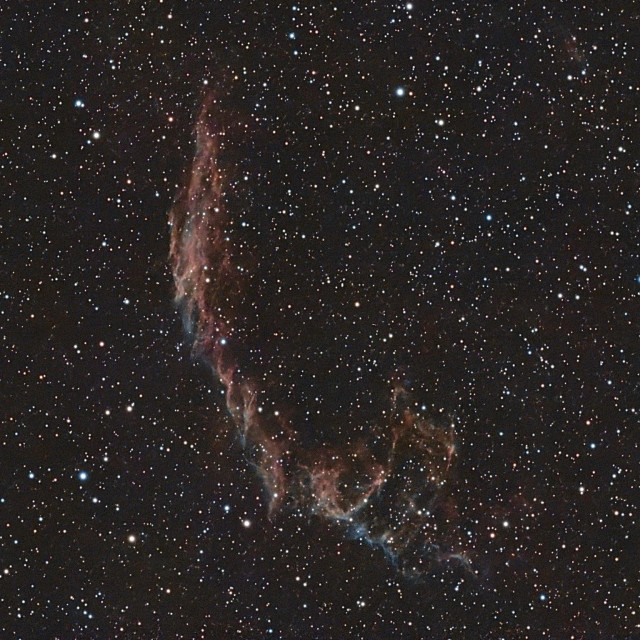
C 33 the Veil Nebula last night taken with my new Dwarf 3 smart telescope. Had a Dwarf 2 but don’t think it was well-collimated. This one has sharper stars which is showing some lovely detail. This was about 220 frames at 15s each using the dual-band filter under super light polluted Bortle 8/9 skies. A little processing in Apple Photos. Not bad at all!
#Astrodon #lookup #dwarf3 #seattle #AstroPhotography
Hey professional #astrodon folks!
A pretty unique chance to become my colleague at #ESA - working as a project scientist on our newly adopted galactic archaeology mission Arrakihs:
Job details: jobs.esa.int/job/Noordwijk-Pro…
More about Arrakihs: esa.int/Science_Exploration/Sp…
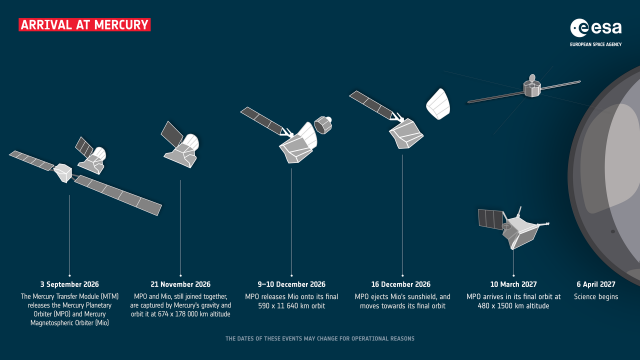
BepiColombo mission is about to arrive at Mercury!
It's a pretty nifty design: ESA's Mercury Planetary Orbiter (MPO) and JAXA's Mercury Magnetospheric Orbiter (Mio) are travelling to #Mercury as a compostive spacecraft, stacked on top of a transfer module. So separation & arrival will happen in stages.
▶️ esa.int/ESA_Multimedia/Images/…
Planetary science is a good reminder that science needs long-term planning and foresight. #BepiColombo was launched in 2018!
#astrodon #space #ESA #JAXA #VicisAstro
RE: mastodon.social/@pomarede/1168…
Surprising claim of superstringy universe may be based on a mistake
Mix-up in distance scales may explain hints of anisotropy in distribution of galaxies.
science.org/content/article/su…
#Cosmology #galaxies #astrodon
Daniel Pomarède (@pomarede@mastodon.social)
Cosmography alert 🚨 Challenging the assumption of large-scale isotropy: detection of anisotropic cosmic structures on a gigaparsec scale in DESI-DR1 data. by Francesco Sylos Labini & Marco Galoppo https://www.nature.Daniel Pomarède (Mastodon)
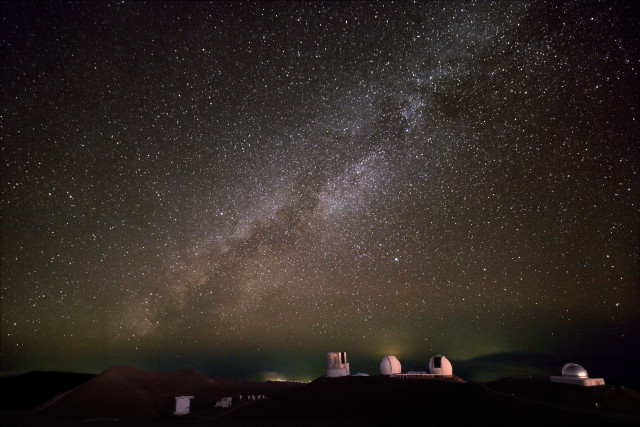
The Milky Way Over the Maunakea Observatories
Credit: Dr. Vera Maria Passegger/NAOJ
subarutelescope.org/en/gallery…
#Maunakea #MilkyWay #photography #astrophotography #Hawaii #astrodon #SubaruTelescope #telescopes
The Milky Way Over the Maunakea Observatories | Subaru Gallery | Subaru Telescope
Subaru Telescope is an 8.2-meter optical-infrared telescope at the summit of Maunakea, Hawaiʻi, operated by the National Astronomical Observatory of Japan (NAOJ), National Institutes of Natural Sciences.Subaru Telescope
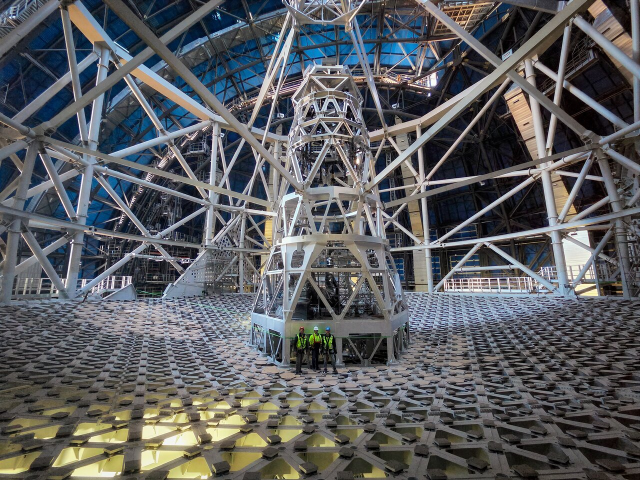
This is why we call it the Extremely Large Telescope!
This photo shows the massive structure that will hold the main mirror of our ELT. It was taken when the construction reached an important milestone: for the first time, the telescope’s structure was rotated horizontally by a few centimetres... by hand!
Read more: eso.org/public/images/potw2627…
1/2
📷 ESO/Cimolai
#astrodon #astronomy #astrophysics #space #science #engineering
And probably my fav of the night getting our galactic core in with some aurora.
#aurora #northernlights #Astrodon #astrophotography #ElbeWA #pnw
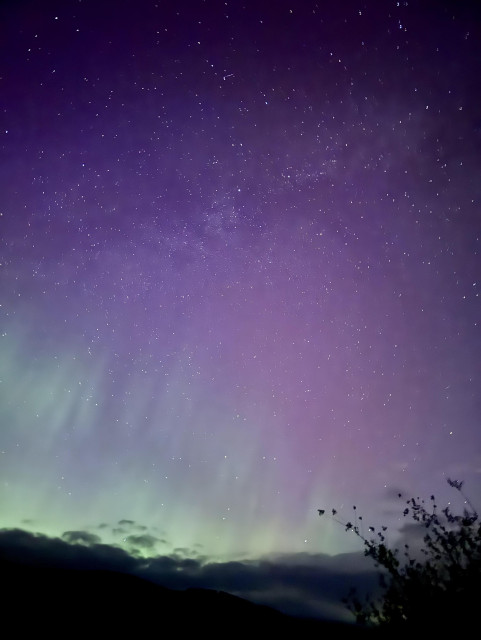
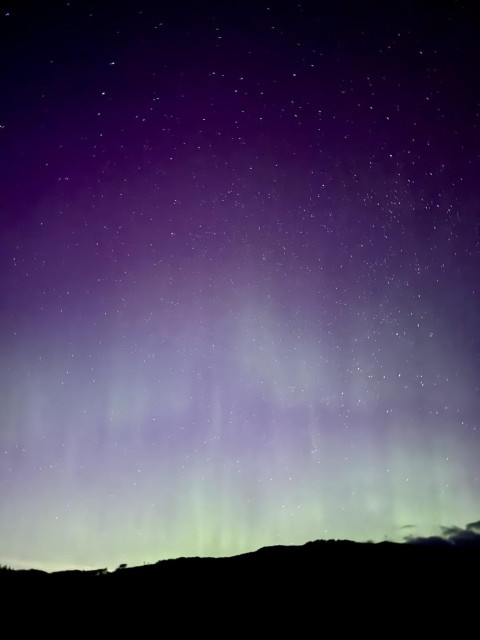
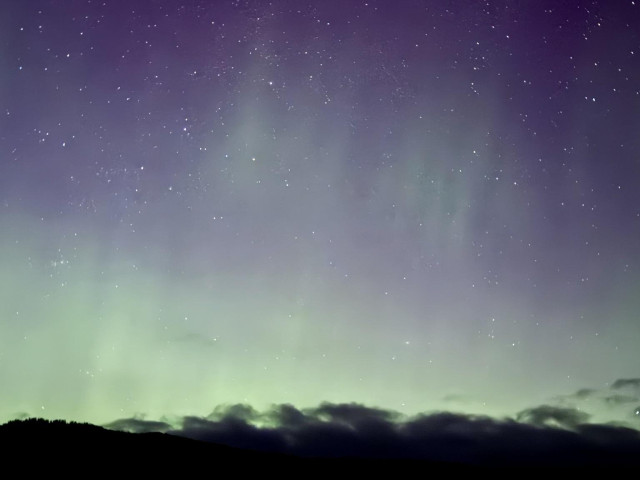
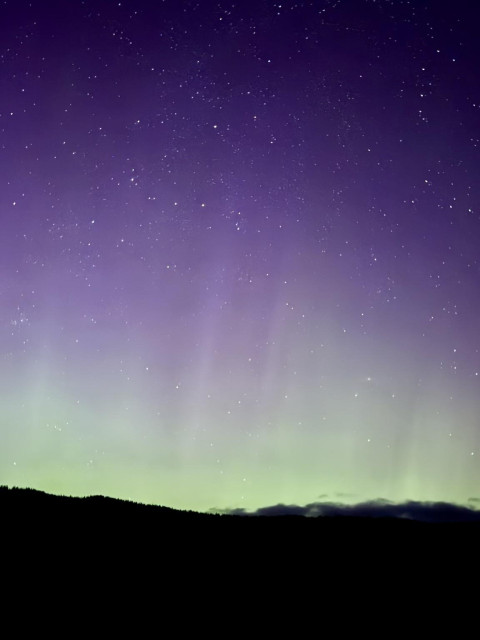
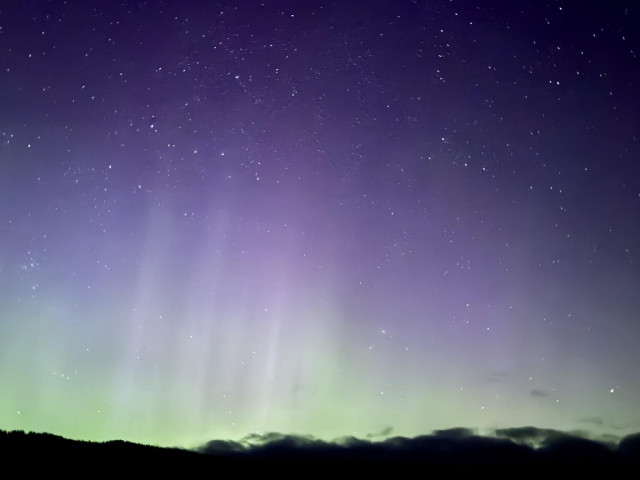
Was able to catch some aurora from near Mt. Rainier tonight. What a treat! Could see structures with my eyes but everything came out with long exposure phone shots.
#aurora #astrophotography #astrodon #tacoma #seattle #NorthernLights
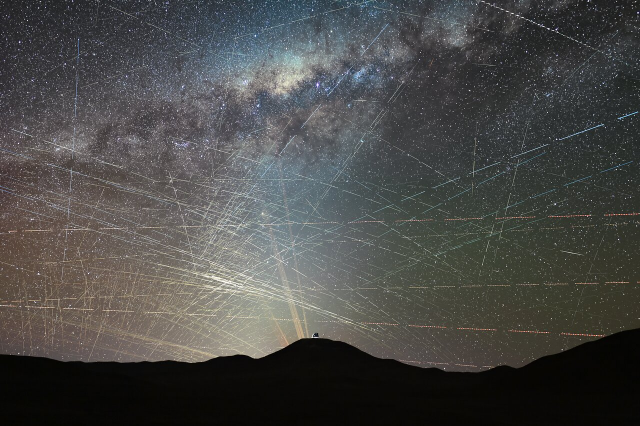
🚨 Beyond the limit 🚨
New ESO study finds that current proposals to launch 1.7+ million satellites into orbit would have devastating consequences for astronomy.
The most extreme proposals come from SpaceX & Reflect Orbital
1/4
📷 F. Kamphues, ESO/M. Kornmesser
#astrodon #astronomy #astrophysics #space #science #environment #pollution
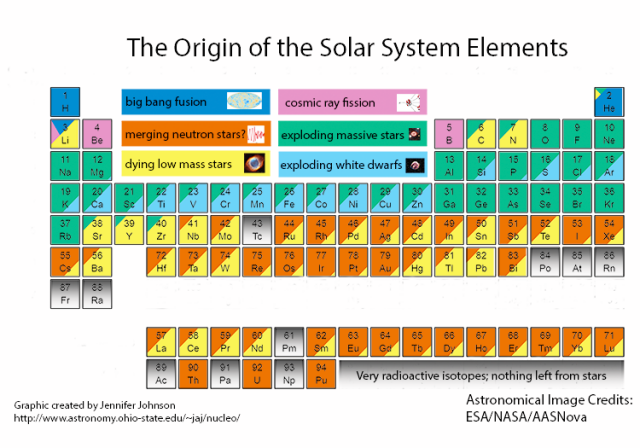
We are all stardust.
The oxygen you breath? That comes from dying massive stars, ending their life in a supernova.
The iron in your blood? Some from massive stars dying, but mainly fron white dwarfs, the leftovers of dwarf stars like our own Sun, exploding.
Carbon, the basis of life? Mostly from dying low mass stars.
The gold ring on your finger? Mostly from merging neutron stars, leftovers from supernovae.
#VicisAstro #astrodon #astronomy #astrophysics

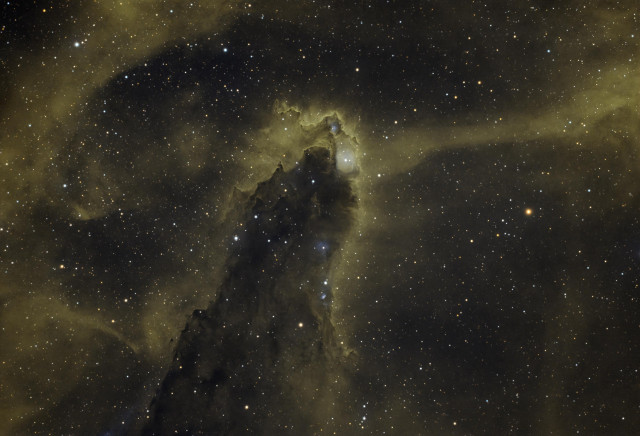
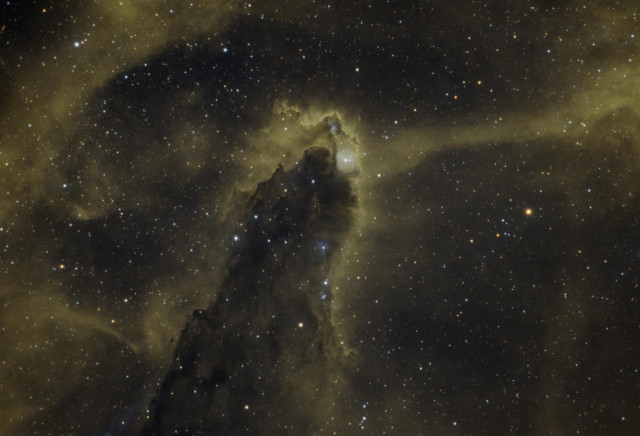
Playing with some new astro processing tools; denoising and sharpening. These are before and after versions of the “Dark Tower” cometary globule in Scorpius (not scorpio)
#astrophotography #space #Astrodon