Search
Items tagged with: Astrophotography

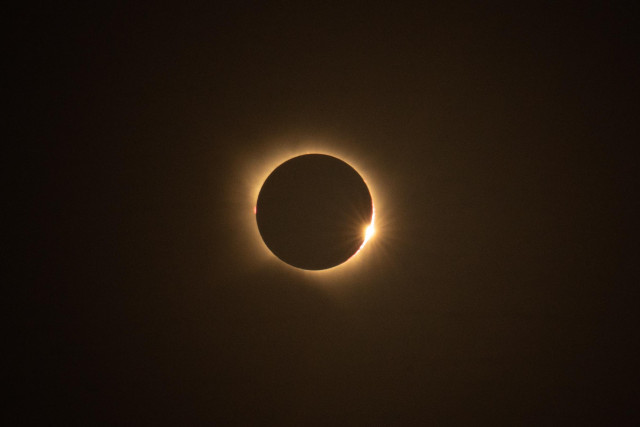


I think this was my favourite photo of the set that I took. It's not at maximum coverage, but it does have a sun spot group (4508) just on the cusp of the terminator.
#eclipse #eclipse2026 #SolarEclipse #London #Astronomy #AstroPhotography #Photography
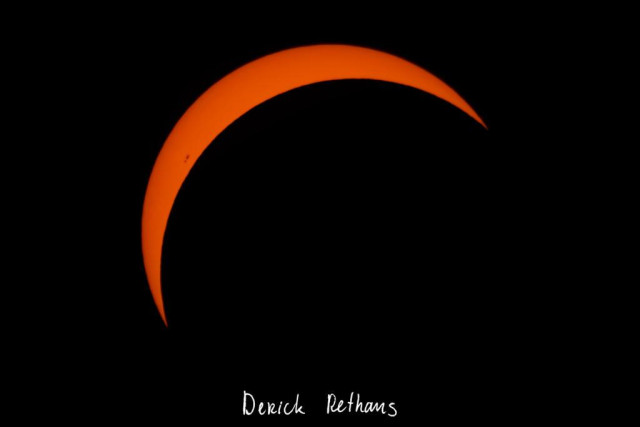
Partial eclipse from Germany. Really happy with how this shot turned out. Taken with an Acuter Elite Phoenix 40 and a ToupTek G3M678M.
#solareclipse #eclipse #eclipse2026 #photography #astrophotography #Astrodon #astronomy #sonnenfinsternis
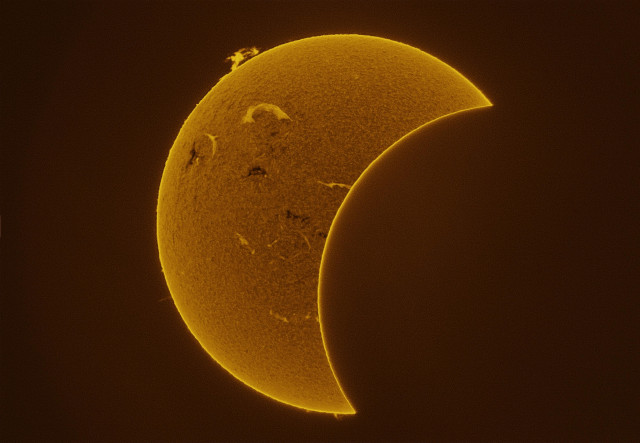
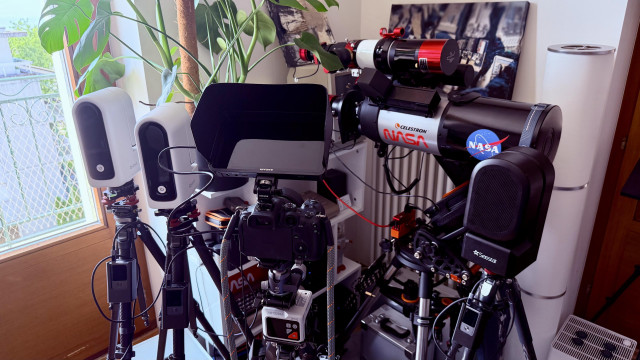
Right, I have a telescope, a solar filter, the possibility of a central London location 8 floors up with a west facing balcony and a solar eclipse to photograph.
I fully expect it to rain tomorrow at 7pm.
Falls sich wer unsicher ist, wie wohl die Einstellungen seiner Kamera sein müssten (ungefähr), um die partielle Sonnenfinsternis zu fotografieren, verweise ich auf diese Webseite:
xjubier.free.fr/en/site_pages/…
Achtet oben in den Auswahlfeldern (Altitude) auch darauf, wie niedrig bzw. hoch die Sonne zu dem Zeitpunkt steht. So könnt ihr euch einen Ablaufplan erstellen und diesen in euren Auslöser eintragen und auch welchen Sonnenfilter ihr benutzt (ND4 oder 5).
Natürlich empfehle ich, das heute oder morgen vorab zu simulieren.
#Astronomie #Astrophotography #SolarEclipse
Solar Eclipse Time Exposure Calculator - Xavier Jubier
Solar Eclipse Calculator for determining the time exposure and field of view by Xavier Jubierxjubier.free.fr
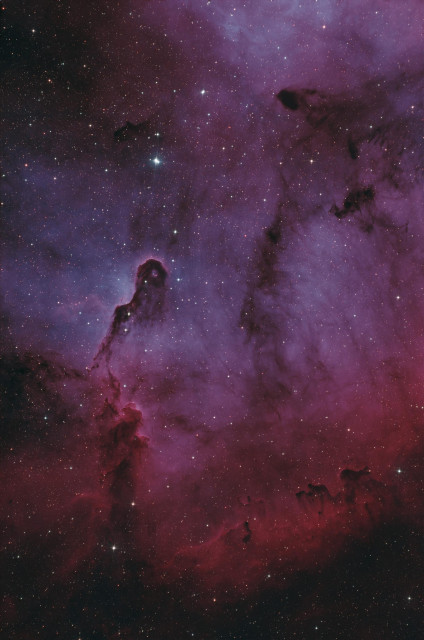
First (night) light with the new scope, just 3 hours worth of DNB data. I'm amazed of how much data it already collected, can't wait to get more time under the stars :)
There are a few things I need to tune and I also need to figure out how to collimate properly though it was a lot less pain than I anticipated.
Anyways, this is the Elephants Trunk Nebula in HOO :)
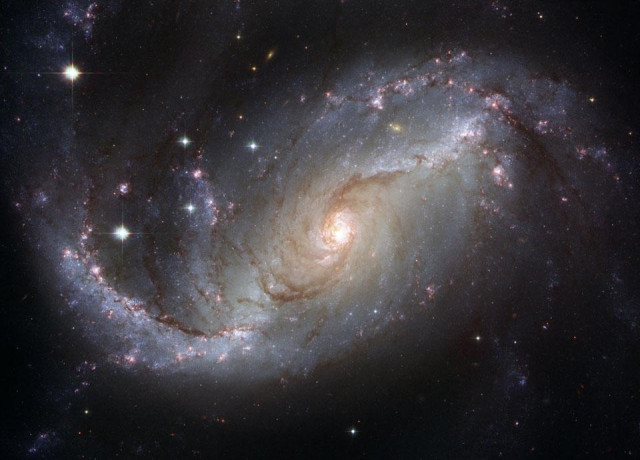
Credits: #NASA, ESA, Hubble Heritage, STScI, AURA, GSFC, U. Leicester
#nature #space #astrophotography
I love creative #astrophotography like today's APOD.
apod.nasa.gov/apod/ap260728.ht…
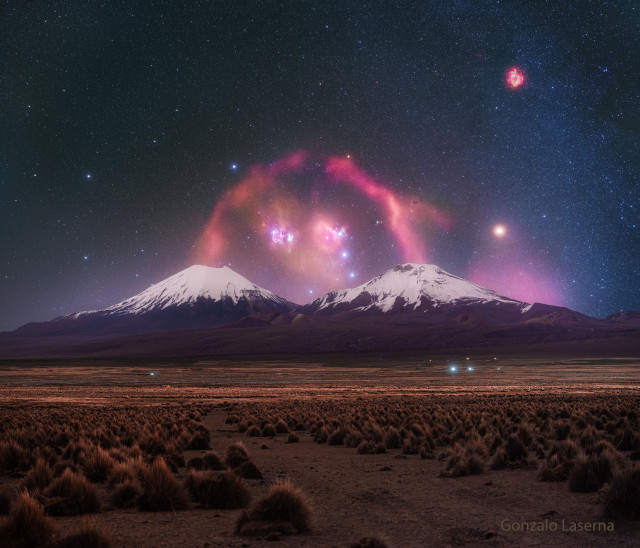
APOD: 2026 July 28 – Barnards Loop over Twin Volcanoes
A different astronomy and space science related image is featured each day, along with a brief explanation.apod.nasa.gov
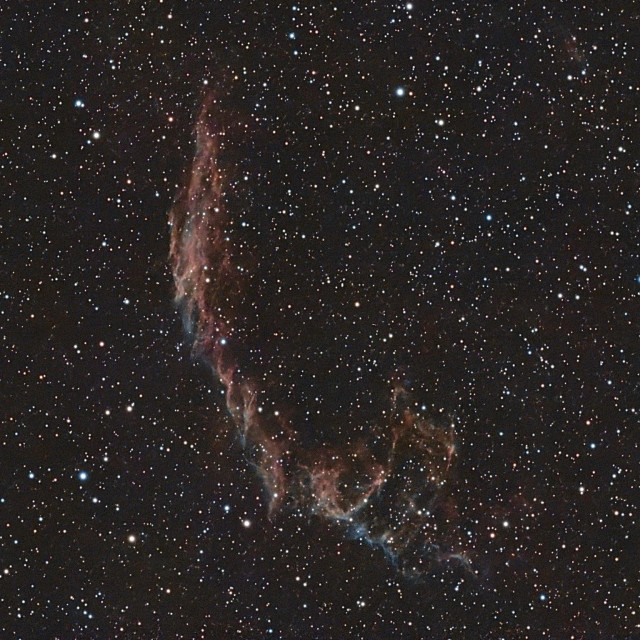
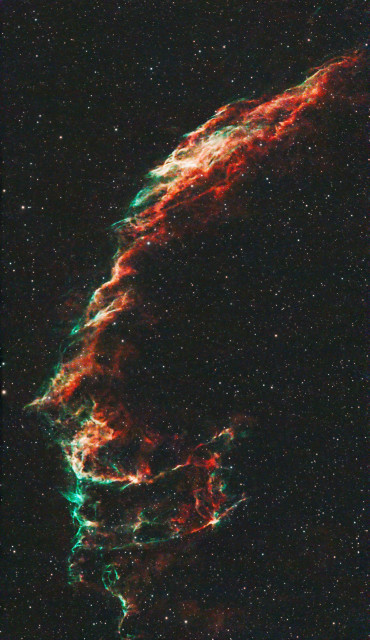
NGC 6992 - Eastern Veil nebula
Another part of the massive Cygnus loop, a 20,000 year old remnant of a supernova that lies about 1500 light years away in the constellation Cygnus. This halo of gas and dust emits light because it is electrically charged (ionised) by the resulting radiation from the supernova.
Seestar S50, processed in Siril and GIMP. Tools include RC-astro, SETI astro and Graxpert.
#astrophotography #cloughjordan #darksky #deepsky #seestar_s50
Stonehenge under the Milky Way — the highlight of my holiday in southern England, captured on the very first night. Almost perfect conditions, right beside the ancient stones.
▼ IRIX 15mm | Canon EOS R
astrocamp.eu/en/stonehenge-and…
#astrophotography #astronomy #nature #deepsky
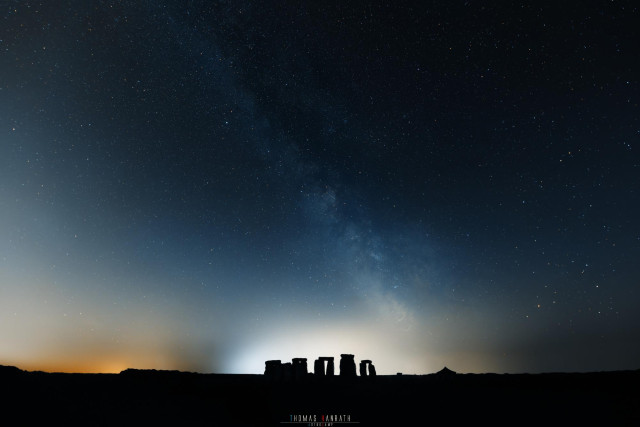
Stonehenge and Milky Way, Jul'26
The highlight of my holiday in southern England came on the very first night: Stonehenge with a touch of the Milky Way!Thomas Hanrath (Astrocamp – Astrophotography & Deep-Sky Catalog)
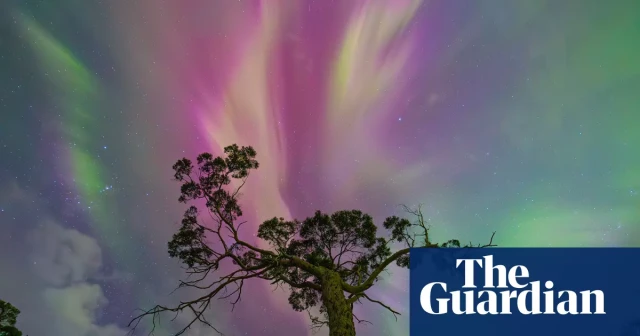
Moon mountains and star dust: David Malin astrophotography awards 2026 – in pictures
'From auroras and nebulas to deep sky star clusters, the competition features submissions from amateur astronomers and photographers from Australia and around the world'
C 33 the Veil Nebula last night taken with my new Dwarf 3 smart telescope. Had a Dwarf 2 but don’t think it was well-collimated. This one has sharper stars which is showing some lovely detail. This was about 220 frames at 15s each using the dual-band filter under super light polluted Bortle 8/9 skies. A little processing in Apple Photos. Not bad at all!
#Astrodon #lookup #dwarf3 #seattle #AstroPhotography