Search
Items tagged with: space

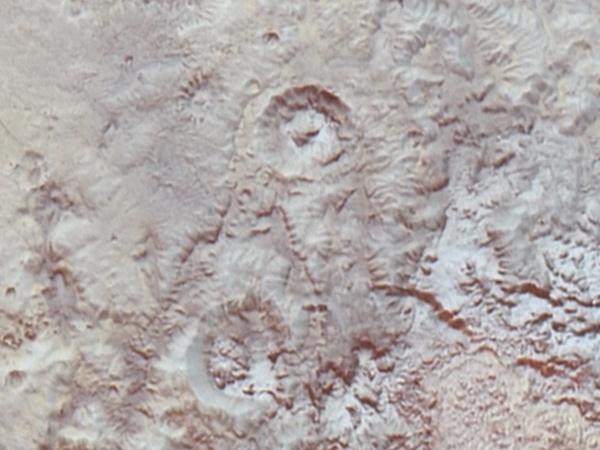

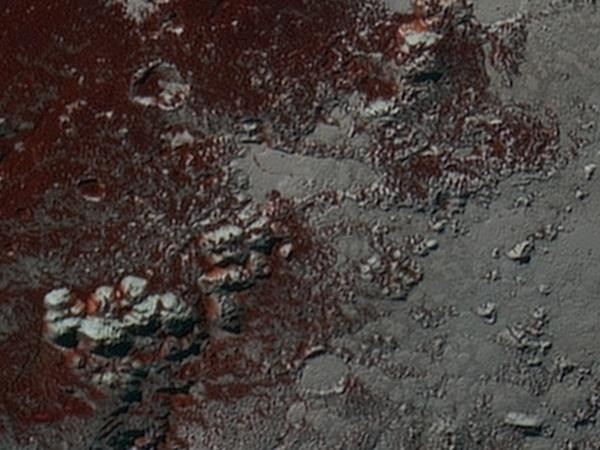
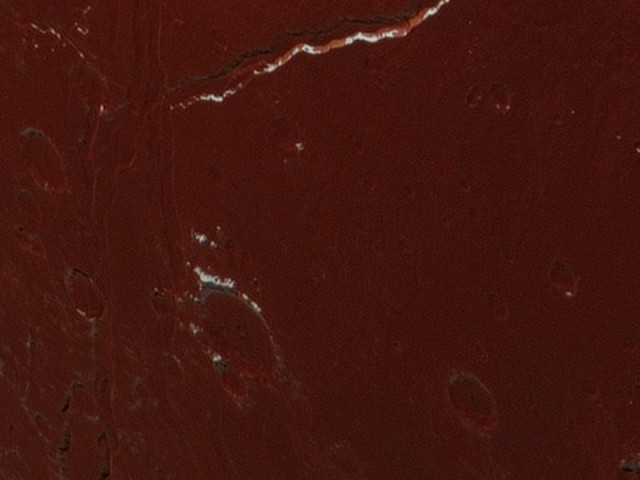
RE: stefanbohacek.online/@voyagers…
The Voyager 1 interstellar probe, part of NASA's Voyager program launched in 1977, will reach one light-day distance from Earth
on November 18, 2026.
Follow along with @voyagers.
science.nasa.gov/mission/voyag…
#voyager #space #science #nasa
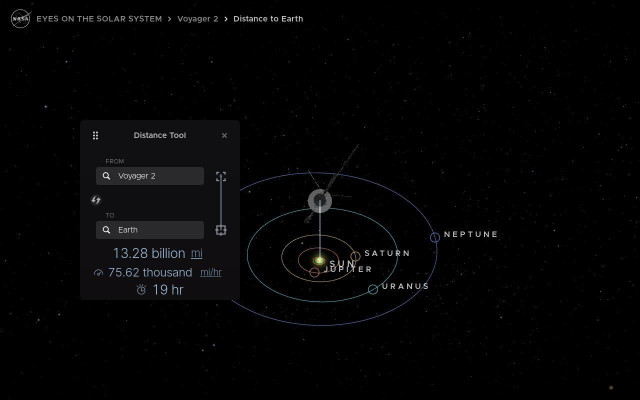
Voyagers (@voyagers@stefanbohacek.online)
Attached: 2 images Voyager 1 is 25.52 billion km/15.86 billion miles away from Earth and will reach 1 light-day from Earth in 119 days, 11 hours: https://eyes.nasa.gov/apps/solar-system/#/sc_voyager_1/distance?to=earth Voyager 2 is 21.Voyagers (Stefan's Personal Mastodon Server)
🐙 Scientists drilled 1.3 km into the Atlantic seafloor and found the hidden plumbing system powering the "Lost City" - a field of hydrothermal vents where life thrives without sunlight, fueled by chemical reactions between seawater and mantle rock.
Huge implications for finding life on ocean worlds like Europa.
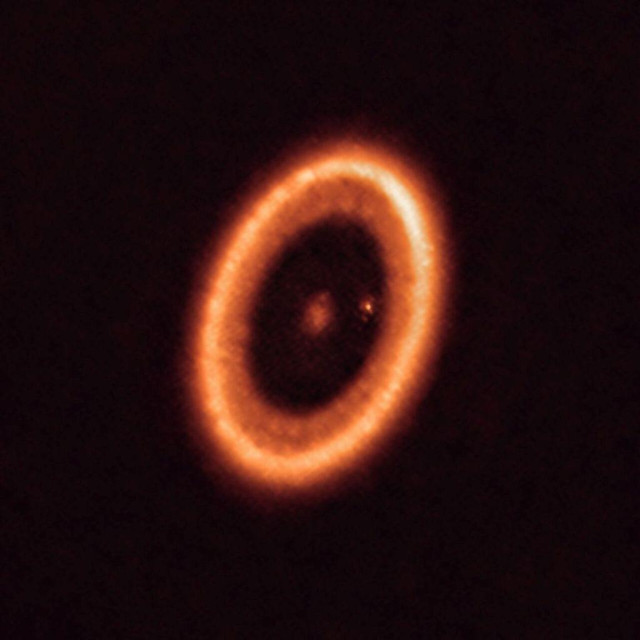
#PPOD: This image is quite extraordinary, and it's not the big disk that's attracting the most attention. Although the planet PDS 70c (just inside the disk) is newly formed and, interestingly, similar in size and mass to Jupiter, it's the fuzzy patch around it that's causing the commotion. That fuzzy patch is thought to be itself a dusty disk that is now forming into moons -- and that has never been seen before. Credit: ALMA (ESO/NAOJ/NRAO)/Benisty et al.
☄️ For the first time ever, astronomers have caught a "dark comet" sprouting a tail.
Dark comets look like asteroids but mysteriously speed up as if pushed by invisible jets. Now a team using the Very Large Telescope in Chile has finally photographed a tail on one, confirming they really are comets.
This is huge because it likely solves the 'Oumuamua mystery from 2017 - that weird interstellar object that accelerated for no obvious reason. Turns out it was probably just venting gas from hidden ice, not aliens.
Nearly 20 dark comets are now known, and scientists think there could be far more hiding in plain sight. Since comets may have delivered Earth's oceans, finding a hidden population of them could reshape our understanding of how our planet became habitable.
Published in Nature Astronomy this week.
scientificamerican.com/article…
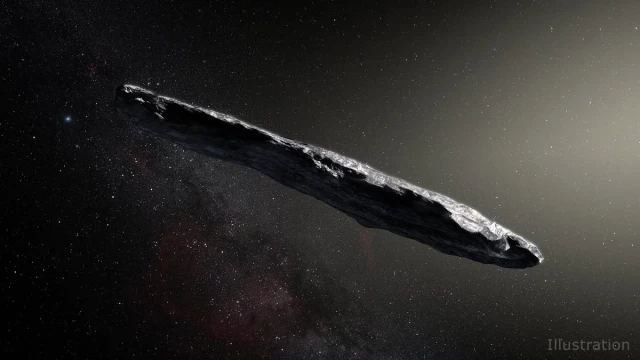
‘Dark’ comets sprouting tails could help solve interstellar mysteries
A strange class of comet could explain the enigmatic behavior of ‘Oumuamua, the first known interstellar object—and even shed light on how Earth became habitableDarryl Z. Seligman (Scientific American)
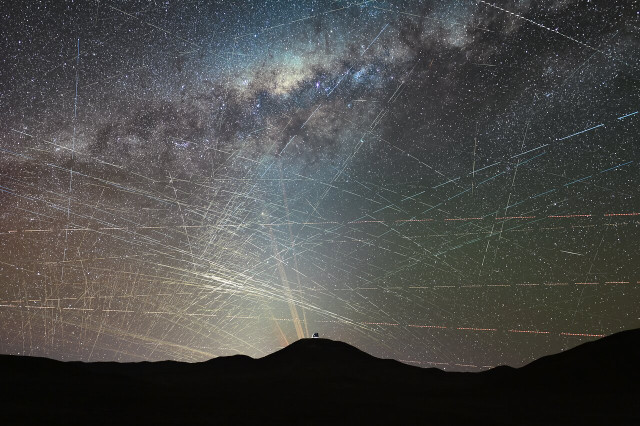
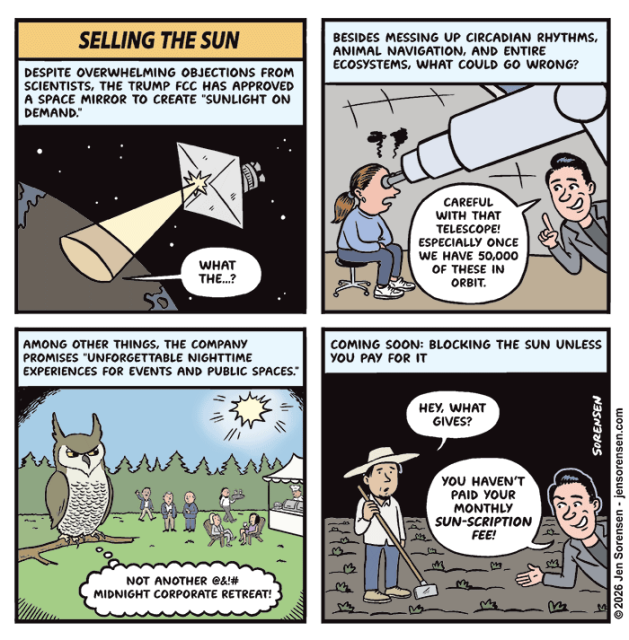
"Beyond the limit": one million satellites and mirrors in space pose grave threat to the night sky
A new European Southern Observatory (ESO) study has found that current proposals to launch over 1.7 million satellites into orbit, including extremely bright ones, would have “devastating consequences for astronomy.www.eso.org
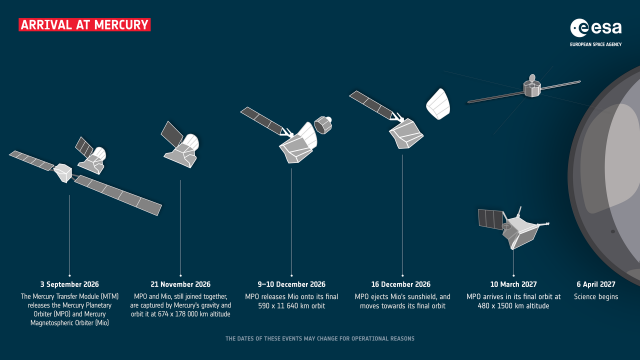
BepiColombo mission is about to arrive at Mercury!
It's a pretty nifty design: ESA's Mercury Planetary Orbiter (MPO) and JAXA's Mercury Magnetospheric Orbiter (Mio) are travelling to #Mercury as a compostive spacecraft, stacked on top of a transfer module. So separation & arrival will happen in stages.
▶️ esa.int/ESA_Multimedia/Images/…
Planetary science is a good reminder that science needs long-term planning and foresight. #BepiColombo was launched in 2018!
#astrodon #space #ESA #JAXA #VicisAstro
Wally Funk dies at 87. She should've been among the first women in space, but sexism stopped her & others. Funk did get a suborbital flight in 2021. Amazing life spent above the clouds, and here she gets a well-deserved detailed obituary.
wapo.st/4f1TggE (gift link)
Featured story: Even before its first workplace death, #SpaceX saw 427 injuries and 9 respiratory illnesses fron 2022 to 2025. These injuries included concussions, burns, hernias, dislocations, crushed hands, and broken ribs, legs, and ankles. texasobserver.org/worker-death…
#ElonMusk #space #tech #safety #Texas #news
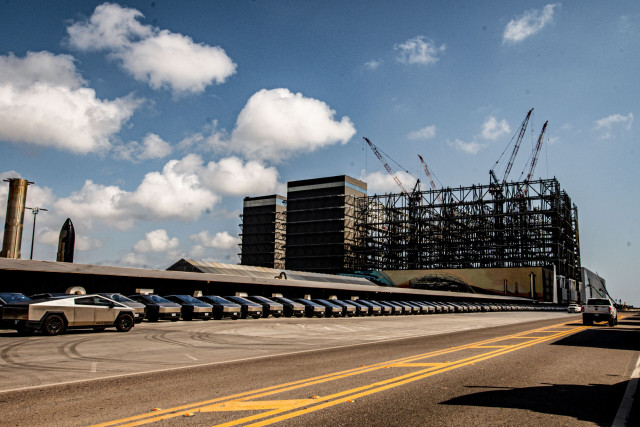
Worker's Death at SpaceX Factory Followed Hundreds of Injuries in Recent Years
A 25-year-old died last month of “blunt force trauma due to a fall.” An Observer analysis found that the injury rate at "Starbase" was well above an industry national average.Gaige Davila (The Texas Observer)
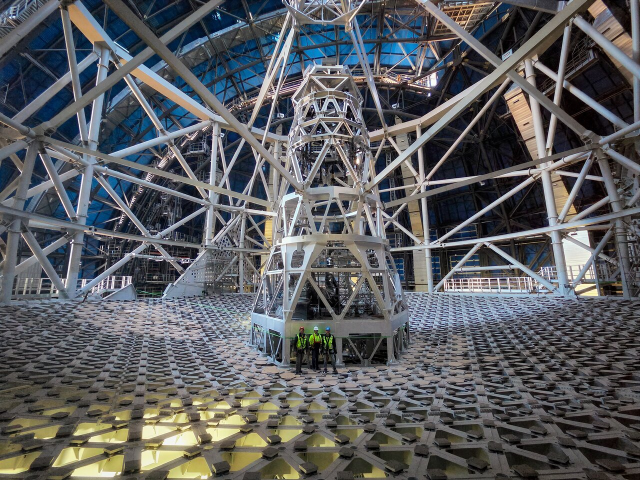
This is why we call it the Extremely Large Telescope!
This photo shows the massive structure that will hold the main mirror of our ELT. It was taken when the construction reached an important milestone: for the first time, the telescope’s structure was rotated horizontally by a few centimetres... by hand!
Read more: eso.org/public/images/potw2627…
1/2
📷 ESO/Cimolai
#astrodon #astronomy #astrophysics #space #science #engineering
#PPOD: This image shows satellites crossing the night sky above the northern Atacama Desert in Chile over just one hour. It is a stack of a time-lapse video taken on 15 October 2025 about two hours after sunset. A few streaks are caused by planes and can be easily identified by their blinking colored lights, but most trails are due to satellites. Credit: F. Kamphues, ESO/M. Kornmesser
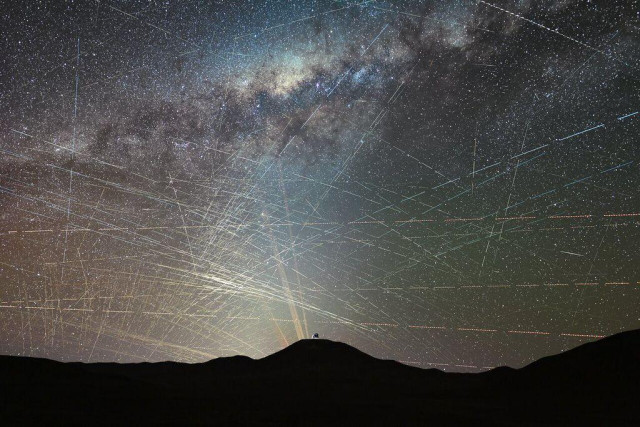
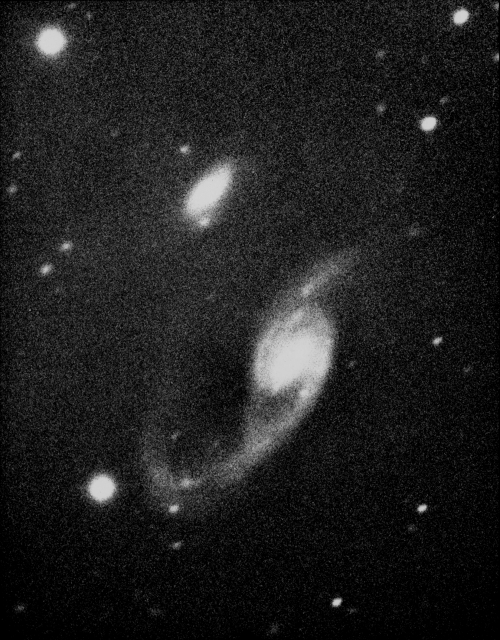
Image of Arp 70, also known as UGC 934, from the Atlas of Peculiar Galaxies by Halton Arp (1966).
In the original catalog, it was in the category: Spiral galaxies - Small, high surface brightness companions. Like its more famous cousin M51 (Arp 85, the Whirlpool galaxy), Arp 70 is a large galaxy with two well-defined spiral arms interacting with a small companion. These interactions are linked to grand-design spiral arms.
Source: ned.ipac.caltech.edu/level5/Ar…
#ArpGalaxy #Galaxy #Space #Astronomy
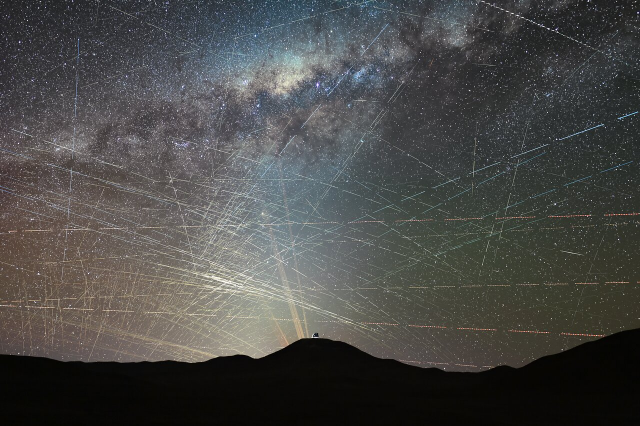
🚨 Beyond the limit 🚨
New ESO study finds that current proposals to launch 1.7+ million satellites into orbit would have devastating consequences for astronomy.
The most extreme proposals come from SpaceX & Reflect Orbital
1/4
📷 F. Kamphues, ESO/M. Kornmesser
#astrodon #astronomy #astrophysics #space #science #environment #pollution

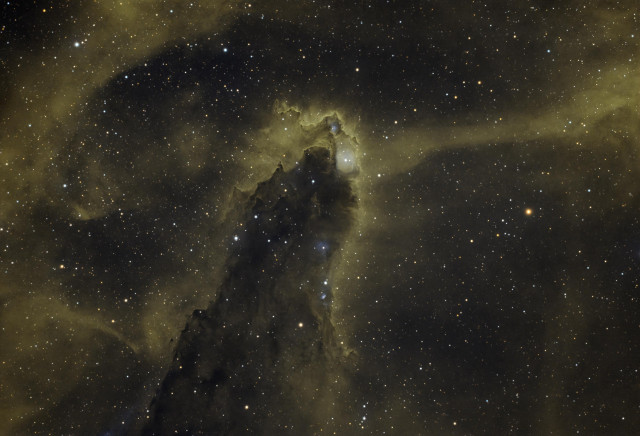
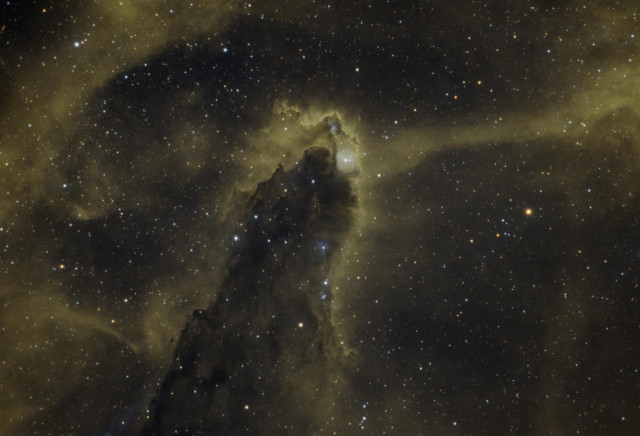
Playing with some new astro processing tools; denoising and sharpening. These are before and after versions of the “Dark Tower” cometary globule in Scorpius (not scorpio)
#astrophotography #space #Astrodon
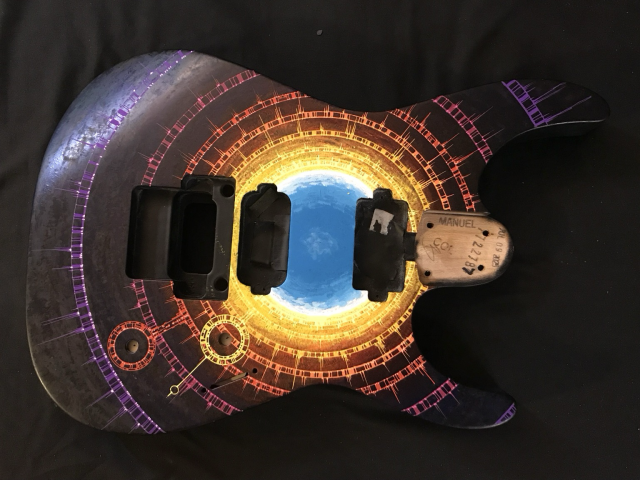
Masto friends see it first: guitar top is done! Very happy with it!🤘😎👍
Please boost and share! Solo creator gotta get bills paid! 🙏😊
@Curator #ArtForSale #MastoArt #FediGiftShop #space #scifi #abstractart #geometricart #geometricabstraction #guitar #gearsquad
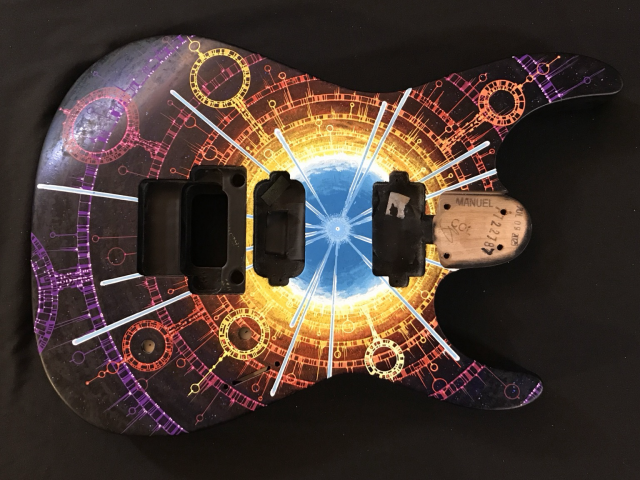
Oh I haven’t put this up here! Another guitar for Amplified Creations, show starts 7/11 in DTLA at Hive Gallery! Work in progress, will finish this week. For immediate sale, DM to inquire! 😊
Please boost and share! Solo creator supporting myself unassisted! 🙏😊
@Curator #ArtForSale #MastoArt #FediGiftShop #space #scifi #abstractart #geometricart #geometricabstraction #guitar #gearsquad