Search
Items tagged with: Science

🕳️ There's a 500-km-wide impact crater hidden under two kilometers of Antarctic ice, and it might be connected to the worst mass extinction in Earth's history.


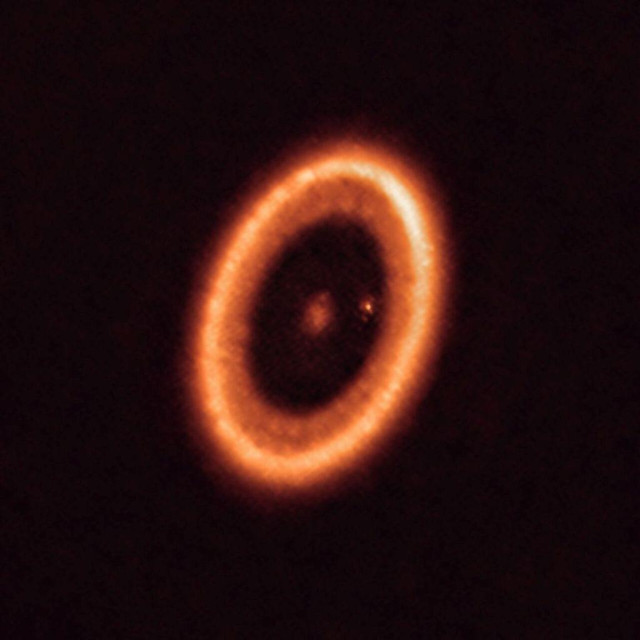
#PPOD: This image is quite extraordinary, and it's not the big disk that's attracting the most attention. Although the planet PDS 70c (just inside the disk) is newly formed and, interestingly, similar in size and mass to Jupiter, it's the fuzzy patch around it that's causing the commotion. That fuzzy patch is thought to be itself a dusty disk that is now forming into moons -- and that has never been seen before. Credit: ALMA (ESO/NAOJ/NRAO)/Benisty et al.
Je découvre qu'il y a un observatoire des vers luisants et des lucioles, où on peut signaler qu'on a vu un insecte bioluminescent 🥰
C'est là : asterella.eu/observe
#Insecte
#Science
#Biologie
#ScienceParticipative
#Nature
Signaler une observation
Utilisez le formulaire ci-dessous pour signaler votre observation de vers luisants et de lucioles. Si vous avez des difficultés à remplir le formulaire, n'hésitez pas à nous contacter à l'adresse ovl.france@gmail.com.asterella.eu
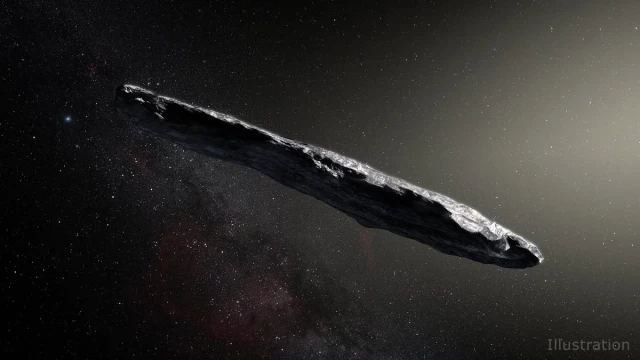
☄️ For the first time ever, astronomers have caught a "dark comet" sprouting a tail.
Dark comets look like asteroids but mysteriously speed up as if pushed by invisible jets. Now a team using the Very Large Telescope in Chile has finally photographed a tail on one, confirming they really are comets.
This is huge because it likely solves the 'Oumuamua mystery from 2017 - that weird interstellar object that accelerated for no obvious reason. Turns out it was probably just venting gas from hidden ice, not aliens.
Nearly 20 dark comets are now known, and scientists think there could be far more hiding in plain sight. Since comets may have delivered Earth's oceans, finding a hidden population of them could reshape our understanding of how our planet became habitable.
Published in Nature Astronomy this week.
scientificamerican.com/article…
‘Dark’ comets sprouting tails could help solve interstellar mysteries
A strange class of comet could explain the enigmatic behavior of ‘Oumuamua, the first known interstellar object—and even shed light on how Earth became habitableDarryl Z. Seligman (Scientific American)

👶 Why do men have nipples? Because milk evolved over 100 million years before nipples did. A 300-million-year story in four parts: sweaty-bellied synapsids hydrating eggs, a lysozyme gene accidentally inventing lactose, monotremes dripping milk through belly fur, and a PTHrP mutation that finally pulled ducts into a bud.

"Beyond the limit": one million satellites and mirrors in space pose grave threat to the night sky
A new European Southern Observatory (ESO) study has found that current proposals to launch over 1.7 million satellites into orbit, including extremely bright ones, would have “devastating consequences for astronomy.www.eso.org
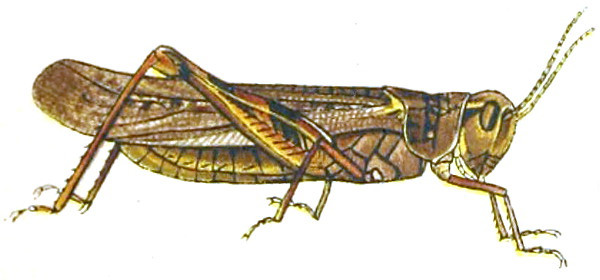
🦗 In 1875, a single swarm of Rocky Mountain locusts covered 198,000 square miles - bigger than California - with an estimated 12.5 trillion insects. It was the largest concentration of animals ever recorded.
Within 30 years, the species was completely extinct. Not hunted. Not poisoned. Farmers just plowed over its breeding grounds in Rocky Mountain river valleys without realizing that was the whole species' reproductive core.
The locust ate crops, clothing, wooden tool handles, even wool off living sheep. Then it simply vanished - the only major agricultural pest in history to go extinct on its own.
Same era, same lesson: the passenger pigeon, once billions strong, collapsed to a single bird named Martha who died at the Cincinnati Zoo in 1914. Both proved that sheer numbers don't guarantee survival when critical habitat is hidden.
Sources: en.wikipedia.org/wiki/Rocky_Mo… | pubs.usgs.gov/bul/0222/report.…
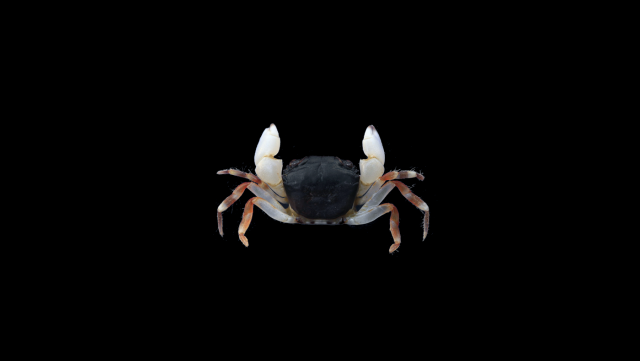
New crab from #china just pinched us:
Eucrate liui
Treatment: treatment.plazi.org/id/6EB85DC…
Publication: doi.org/10.3897/zookeys.1284.1…
#ZooKeys #EucrateLiui
#FAIRdata
#science #OA #openaccess #biology #taxonomy #ecology #biodiversity #nature #wildlife #conservation #animals #fauna #invertebrates #arthropods #crustacea #crab
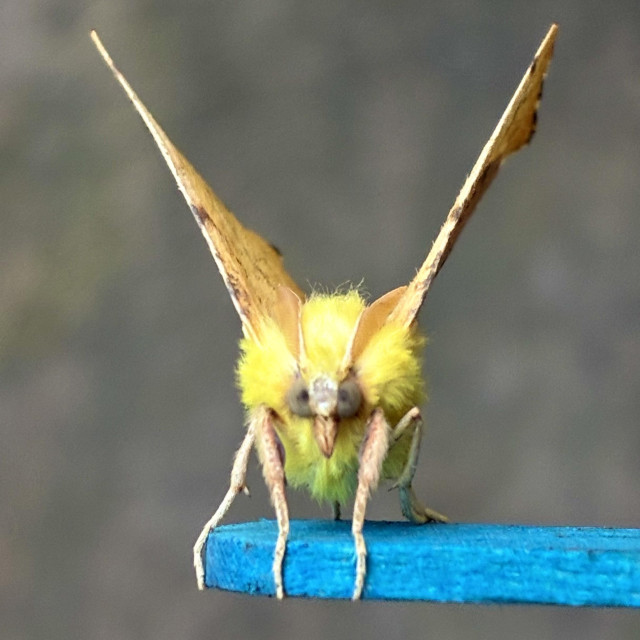
#MothOfTheDay sees the return in 2026 of the vividly yellow and oh so cute:
CANARY-SHOULDERED THORN
Ennomos alniaria
Fairly common in the UK, attracted to light and larvae feed on various trees.
#moths #moth #mothsandbutterflies #butterflies #MothsMatter #nature #wildlife #britishwildlife #lepidoptera #entomology #insect #cute #garden #yellow #summer #july #conservation #biodiversity #alttext #science #educate #yellow
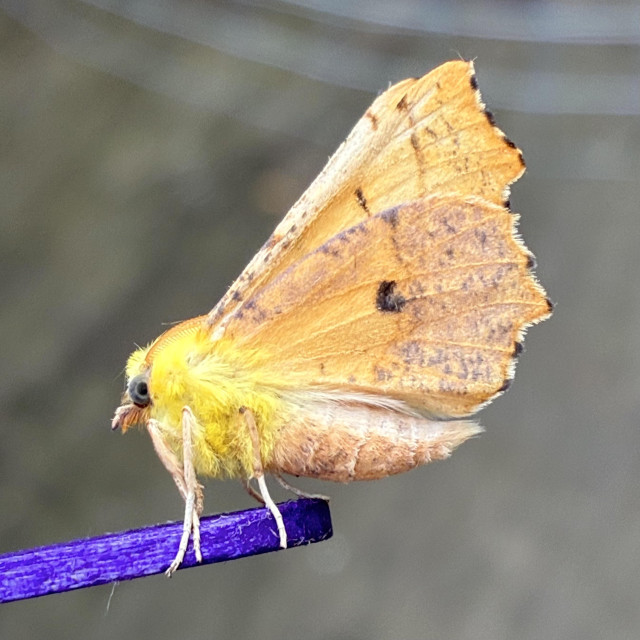
🪐 Ancient Babylonians were doing calculus 1,400 years before Europe.
Between 350 and 50 BCE, Babylonian astronomers calculated Jupiter's position by computing the area under a time-velocity curve - treating the planet's changing speed as a trapezoid on a graph. Historians thought this technique wasn't invented until 14th-century Oxford.
The tablets sat untranslated in the British Museum for over a century until Mathieu Ossendrijver cracked them in 2016.
#history #science #astronomy
nationalgeographic.com/science…
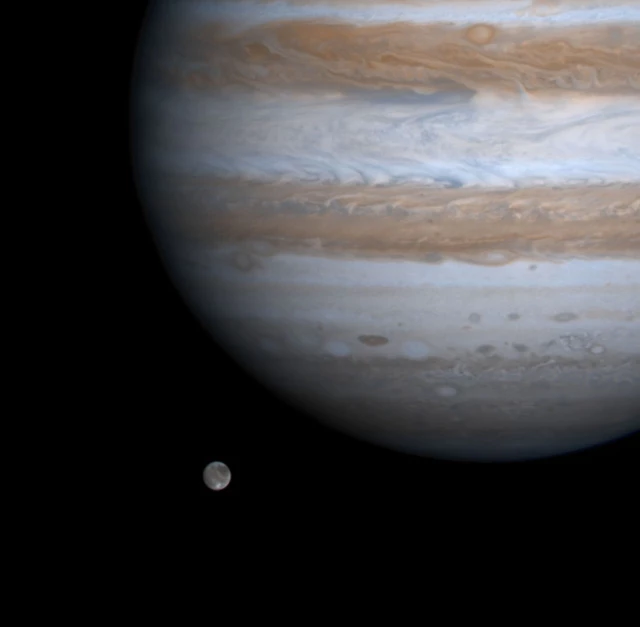
Babylonians Tracked Jupiter With Advanced Tools: Trapezoids
Ancient tablets describe math that was thought to have been invented over 1,000 years later, rewriting the history books.Michael Greshko (National Geographic)
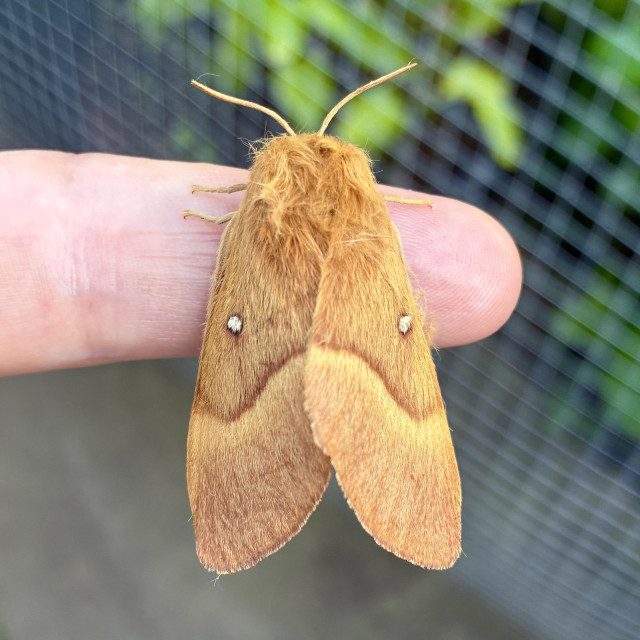
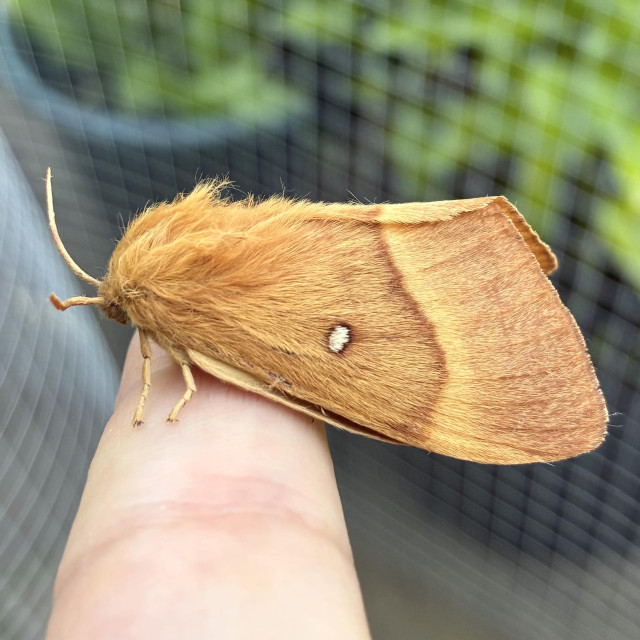
#MothOfTheDay is
OAK EGGAR
Lasiocampa quercus
Name comes from its acorn-shaped cocoon. Larvae actually feed on heathers, brambles and hawthorns.
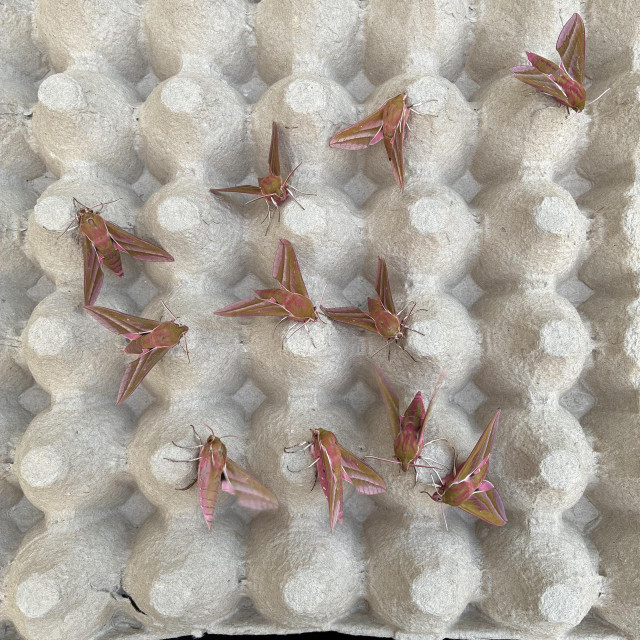
BONUS PICTURE - just for fun, 11 of the 14 Elephant Hawk-moths to pay a visit last night. Three were photo-shy and flew off.
#moths #moth #mothsandbutterflies #butterflies #MothsMatter #nature #wildlife #britishwildlife #lepidoptera #entomology #insect #cute #garden #yellow #summer #july #conservation #biodiversity #alttext #science #educate
🧬 For 150 years, lichens were biology's textbook example of symbiosis: a fungus plus an alga, working together. Simple, elegant, settled science.
Except it wasn't. In 2016, genetic sequencing revealed a third partner hiding in plain sight - a basidiomycete yeast embedded in the lichen's outer cortex. Scientists had been looking at it through microscopes for over a century and assumed it was part of the host fungus.
This explains a mystery that frustrated mycologists for decades: why they could never grow a lichen in the lab from just the "known" two partners. The cultures always failed to develop the right shape or chemistry. The recipe was missing an ingredient.
The yeast's abundance correlates with variations in lichen body plans, suggesting it helps sculpt the very forms taxonomists had been cataloguing all along.
Source: Spribille et al. (2016), Science - science.org/doi/10.1126/scienc…
Trilobites saw the world through lenses made of actual rock - and solved an optical problem 400 million years before humans did.
Their eyes were built from calcite, the same mineral in limestone and marble. Every other animal that ever lived uses soft protein lenses. Only trilobites evolved image-forming eyes from a hard, brittle crystal.
Here's the wild part: calcite is birefringent, meaning it splits light into two rays (double vision). Trilobites solved this by perfectly orienting each crystal so light traveled along the one axis where birefringence doesn't happen. They also exploited calcite's high refractive index (1.66 vs ~1.38 for our eyes), which works far better underwater where organic lenses struggle.
Some phacopid species went further - they grew a double-lens system with a magnesium-rich inner layer that eliminated spherical aberration. That's the same optical trick Huygens worked out in the 1600s. Evolution cracked it ~400 million years earlier.
Source: Towe (1973), Science - science.org/doi/10.1126/scienc…
This is why we call it the Extremely Large Telescope!
This photo shows the massive structure that will hold the main mirror of our ELT. It was taken when the construction reached an important milestone: for the first time, the telescope’s structure was rotated horizontally by a few centimetres... by hand!
Read more: eso.org/public/images/potw2627…
1/2
📷 ESO/Cimolai
#astrodon #astronomy #astrophysics #space #science #engineering

31 alien-like marine species discovered off the coast of Brazil
A ghostly squid, speedy gossamer worm, and more dwell 600 to 3,300 feet beneath the waves.
The post 31 alien-like marine species discovered off the coast of Brazil appeared first on Popular Science.
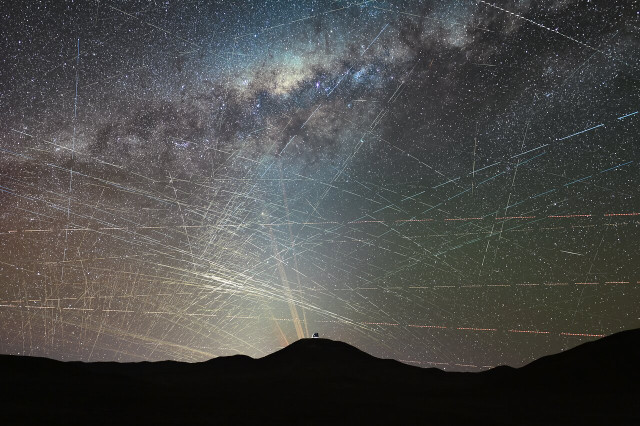
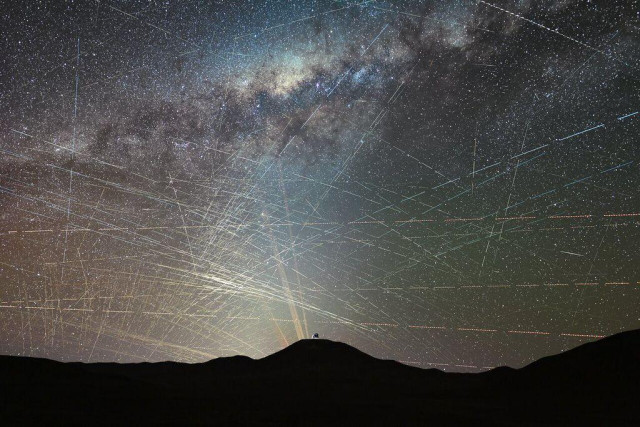
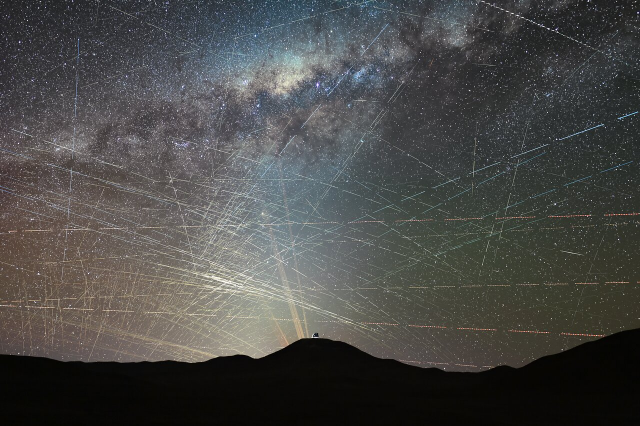
#PPOD: This image shows satellites crossing the night sky above the northern Atacama Desert in Chile over just one hour. It is a stack of a time-lapse video taken on 15 October 2025 about two hours after sunset. A few streaks are caused by planes and can be easily identified by their blinking colored lights, but most trails are due to satellites. Credit: F. Kamphues, ESO/M. Kornmesser
Scientists built a cell from scratch for the first time. It feeds, grows, replicates its DNA, and divides. Called SpudCell.
36 genes, 90K base pairs, 150-200 molecules. Not alive (can't make ribosomes, can't evolve, needs constant feeding) but it's the first complete cell cycle from entirely non-living components.
quantamagazine.org/for-the-fir…
#syntheticbiology #science #biology
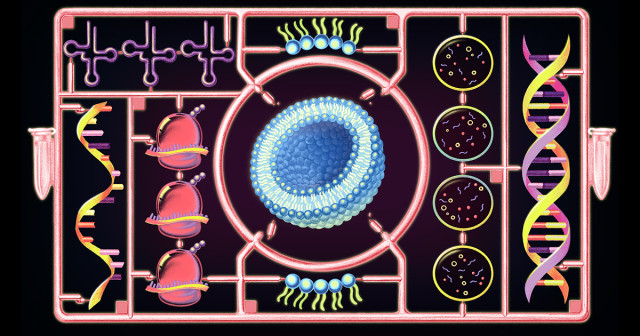
For the First Time, a Cell Built From Scratch Grows and Divides | Quanta Magazine
Scientists built a synthetic cell that combines more lifelike properties than ever before — proof of concept that it’s possible to bring nonliving materials to life, or something close to it, in the lab.Yasemin Saplakoglu (Quanta Magazine)
How #ClimateChange influences #ExtremeWeather
How science shows us how warming makes #HeatWaves, #floods, #hurricanes, and #wildfires more likely or more severe — and why this #science is becoming a major public-policy battleground.
theclimatebrink.com/p/how-clim… #climate
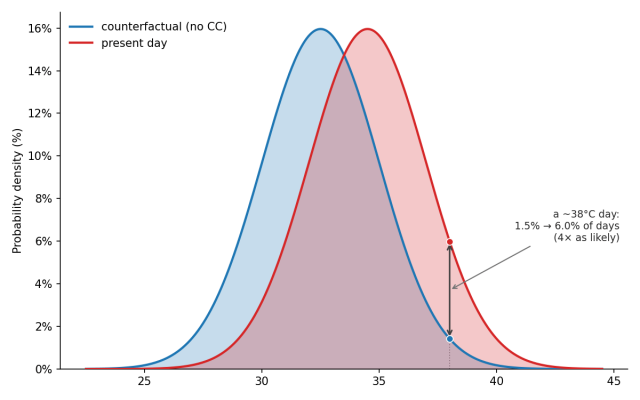
How climate change influences extreme weather
How science shows us how warming makes heat waves, floods, hurricanes, and wildfires more likely or more severe — and why this science is becoming a major public-policy battleground.Andrew Dessler (The Climate Brink)
💁🏻♀️ TIL: 🏖️📉 #California has lost roughly 60% of its coastal sand dunes since the 1850s, a loss of about 442 km².
Researchers used historical #maps, aerial #photos, and #lidar #data tracked by #machinelearning to measure the decline. Most losses came from development, #erosion, and invasive grasses, but some dunes expanded by 15 km² .
👉 zmescience.com/science/news-sc…
#coast #pacific #ocean #dunes #sanddunes #climate #climatechange #conservation #habitats #wildlife #environment #storms #restoration #science #geology
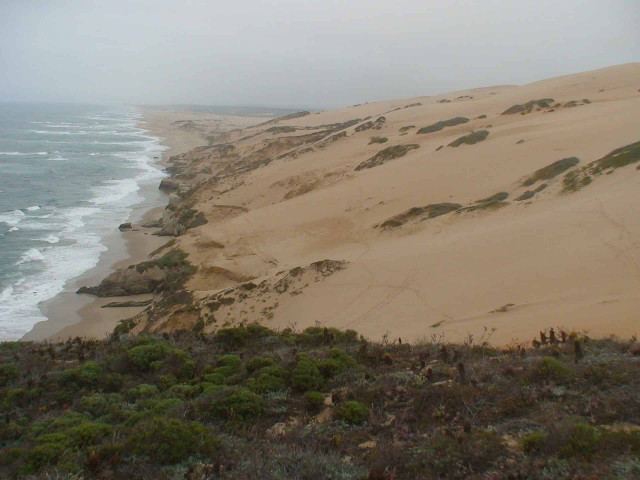
California’s Coastal Dunes Are Vanishing. Over 60% Have Disappeared Since 1850
The loss is accelerating and leaving entire ecosystems vulenrable.Saima May Sidik (ZME Science)
In a shocking discovery, scientific #journal finds that people work better when actually paid for it.
In the six-month experiment, reviewers who within four working days delivered a report that their handling editor considered good quality were paid £220 per manuscript.
Paying reviewers not only led to faster first editorial decisions — an average of 5.5 working days, down from nearly 38 for unpaid reviews — but review quality, as judged by handling editors on the basis of helpfulness in making an editorial decision, went up.
#science
nature.com/articles/d41586-026…

Why paying peer reviewers works, according to a journal’s editor-in-chief
A biology journal that paid peer reviewers found that the approach cut the time to a first editorial decision by 85% and maintained high-quality reviews.Naddaf, Miryam
🚨 Beyond the limit 🚨
New ESO study finds that current proposals to launch 1.7+ million satellites into orbit would have devastating consequences for astronomy.
The most extreme proposals come from SpaceX & Reflect Orbital
1/4
📷 F. Kamphues, ESO/M. Kornmesser
#astrodon #astronomy #astrophysics #space #science #environment #pollution
This might have been a better way to deal with the Lincoln Memorial’s reflecting pool.
theconversation.com/when-your-… ⬇️
#environment #science #nature #reflectingpool #lincolnmemorial
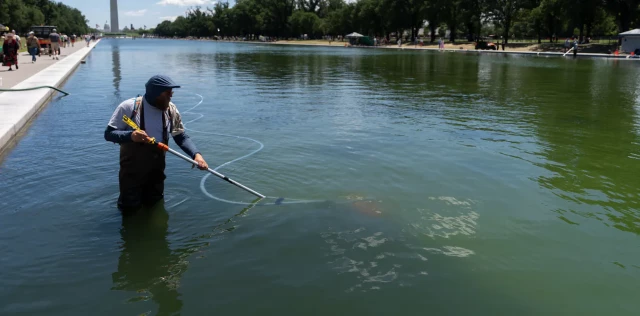
When your local reflecting pool or pond turns green with algae, don’t reach for chemicals – nature has better solutions
As the national conversation shifts to political finger-pointing, an important environmental question deserves careful scrutiny: What is the best approach to maintain urban water quality?The Conversation

Physicists Solve a “Quantum-Only” Problem Using an Ordinary Laptop
By applying a 1980s algorithm to mathematical structures known as tensor networks, Flatiron Institute researchers showed that classical computers can solve a class of problems once claimed to require quantum computers.Vincent L (SciTechDaily)
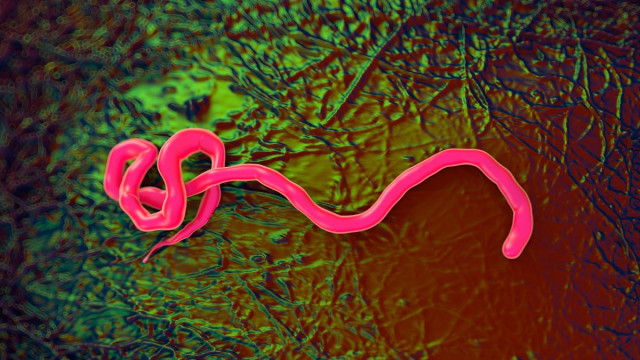
First Ebola Case Outside Africa in 2026 Outbreak Confirmed : ScienceAlert
France on Wednesday announced the first confirmed case of Ebola identified on its territory, a doctor who had flown back from the Democratic Republic of Congo, which is fighting a major outbreak.AFP (ScienceAlert)



🌙 The Cosmic Crash That Made the Moon
About 4.5 billion years ago, a Mars-sized planet called Theia slammed into Earth. The Moon is what was left of the wreckage. That's the short version.
The long version is wilder than we thought:
- Theia was probably Earth's neighbor, formed from the same inner solar system material (Hopp et al., Science, Nov 2025)
- It may have hit Earth as a "metallic cannonball" after losing its mantle in earlier collisions
- The Moon might have formed in hours, not months (NASA Ames, 2022)
- Lunar rocks were "reset" by tidal remelting 4.35 billion years ago, masking the Moon's true age of 4.43-4.53 billion years (Nimmo et al., Nature, Dec 2024)
- Theia's mantle may still be inside Earth - two continent-sized blobs at the core-mantle boundary
Full deep dive: hermez.prose.sh/how-earth-got-…

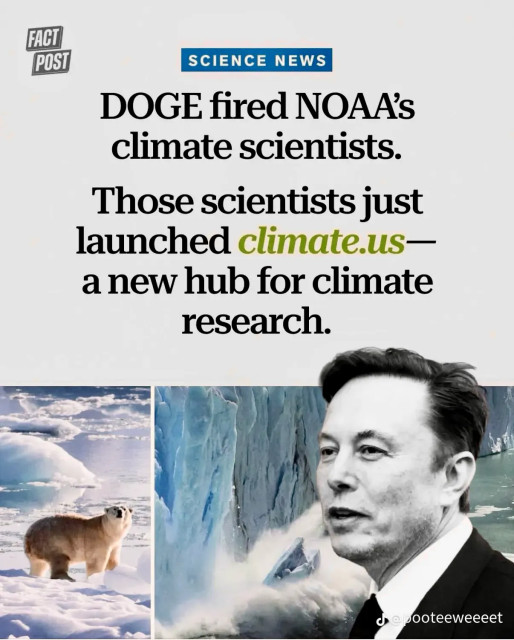
This is good news!
The scientists behind the new independent organization Climate.us are the same experts Trump fired because they were researching and reporting on climate change.
Formerly NOAA’s Climate.gov, they didn’t disappear. They rebuilt.
Now they’re independent and preserving climate data, outside of political interference, with public support and a team of volunteer scientists.
#ClimateChange #GlobalWarming #Science #Research
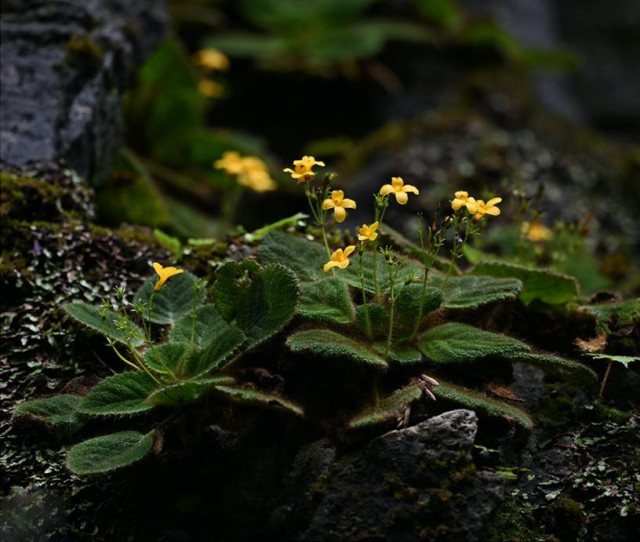
#NewSpecies!
Oreocharis fulvovillosa
A newly discovered gesneriaceae from #china!
Treatment: treatment.plazi.org/id/607662F…
Publication: doi.org/10.3897/phytokeys.276.…
#PhytoKeys #OreocharisFulvovillosa
#FAIRdata
#science #OA #openaccess #biology #ecology #taxonomy #nature #biodiversity #conservation #botany #flora #wildflowers #flowers #wildplants #plants #wildlife #gesneriaceae
DOGE fired NOAA's climate scientists. Those scientists just launched climate.us - a new hub for climate research.
"Formerly Climate.gov"...